Designing Your Safari
Where to Stay on Safari
How the space around you shapes everything.
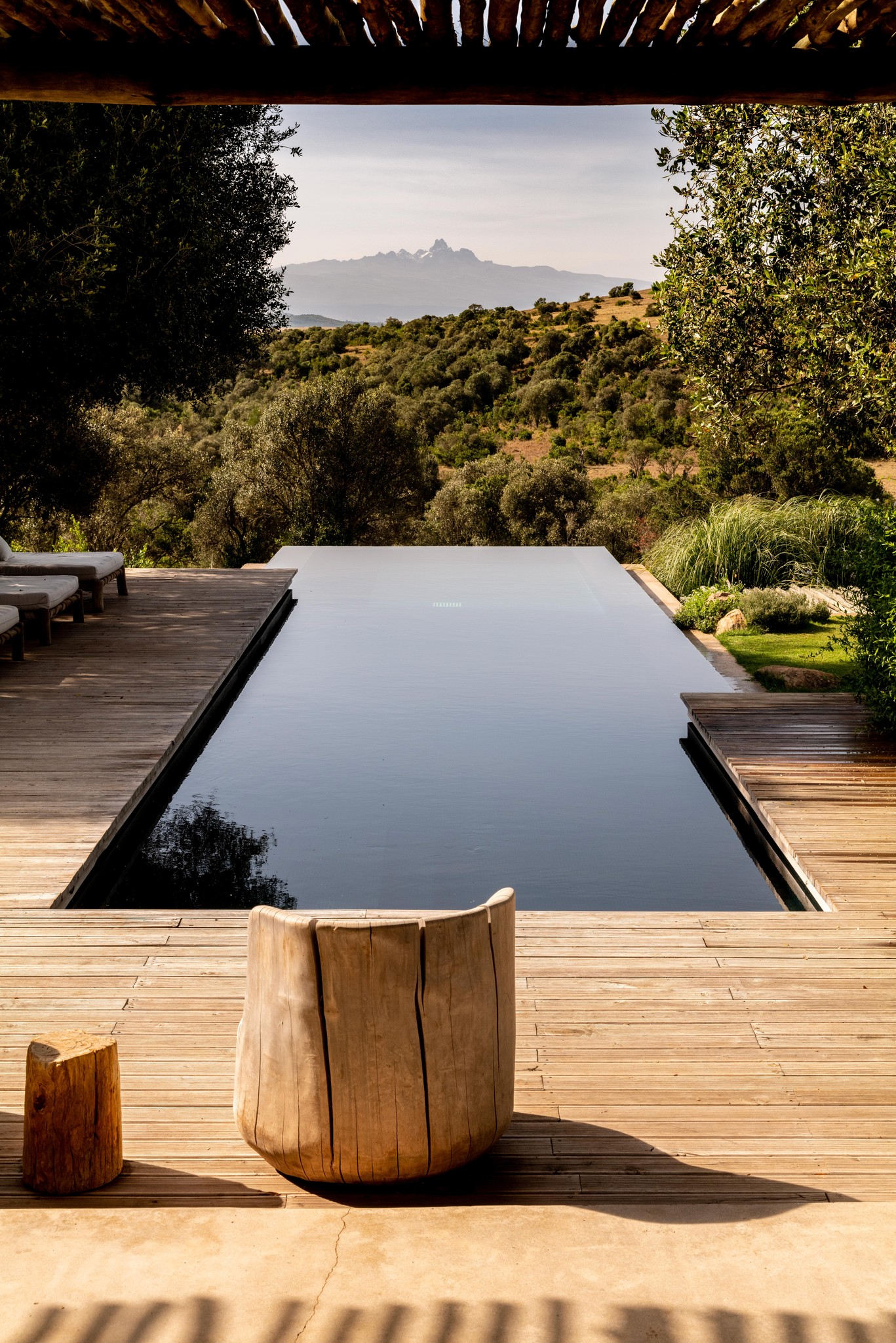
By Hans Arnesen, Founder of Reverie Safaris · Updated September 2026
Safari Accommodation, Explained
How the space around you shapes everything.
On a family's second morning in a private villa, the grandmother realized it wasn't accommodation. It was freedom.
Her daughter had worried about bringing three generations on safari. Would the teenagers be bored? Would her father manage the early starts? Would one bad mood set the tone for everyone?
That second morning she found her father on the deck with coffee, watching giraffes browse the treeline. The teenagers were asleep and would be for two more hours. Her daughter and son-in-law had gone out at dawn with their own guide and vehicle. The youngest was having breakfast with the villa's childminder. And she was alone with her father for the first time in months, neither of them saying much, both entirely content. By lunch everyone had had their perfect morning, and nobody's perfect had cost anyone else theirs.
This is what people misunderstand about safari accommodation. They think it is about finding the nicest place to sleep between game drives. But where you stay is not a neutral container for your days. It is the lens that focuses or scatters your experience of the wilderness, the rhythm that sets how time moves, and a quiet argument about how close to nature you want to be.
None of the choices is better or worse. They serve different temperaments and different ideas of luxury, and this guide is about choosing among them. For which destinations suit which kinds of stay, start with Safari Destinations. For how the seasons change where you should be, read Best Time to Go on Safari.

The Short Answer
Most luxury safaris combine two or three kinds of stay, and the right mix comes from how you want your days to feel rather than from a star rating.
Choose a lodge if you want solid walls, deep sleep and the fullest amenities, which often means air conditioning, a spa and a serious cellar. Choose a tented camp if you want to hear the bush at night without giving up a proper bed, an ensuite bathroom or a hot shower; at the top end it is every bit as luxurious as a lodge. Choose a mobile camp if you want to be where the wildlife is this month, most famously the Migration, rather than where it was last season. Choose a private villa if you are a family or group that wants its own guide, vehicle, chef and schedule.
Whatever the format, stay at least three nights in each place, and choose for the guiding and the location first. A modest camp with a great guide in the right place will outperform a spectacular one in the wrong place every time.
The Four Kinds of Safari Home
Lodges
A safari lodge is a permanent property of stone, timber, thatch or glass. Expect air-conditioned suites, often a private plunge pool, and the fullest range of amenities. Even the flagships stay small by hotel standards: Singita Lebombo has fifteen suites.
Tented Camps
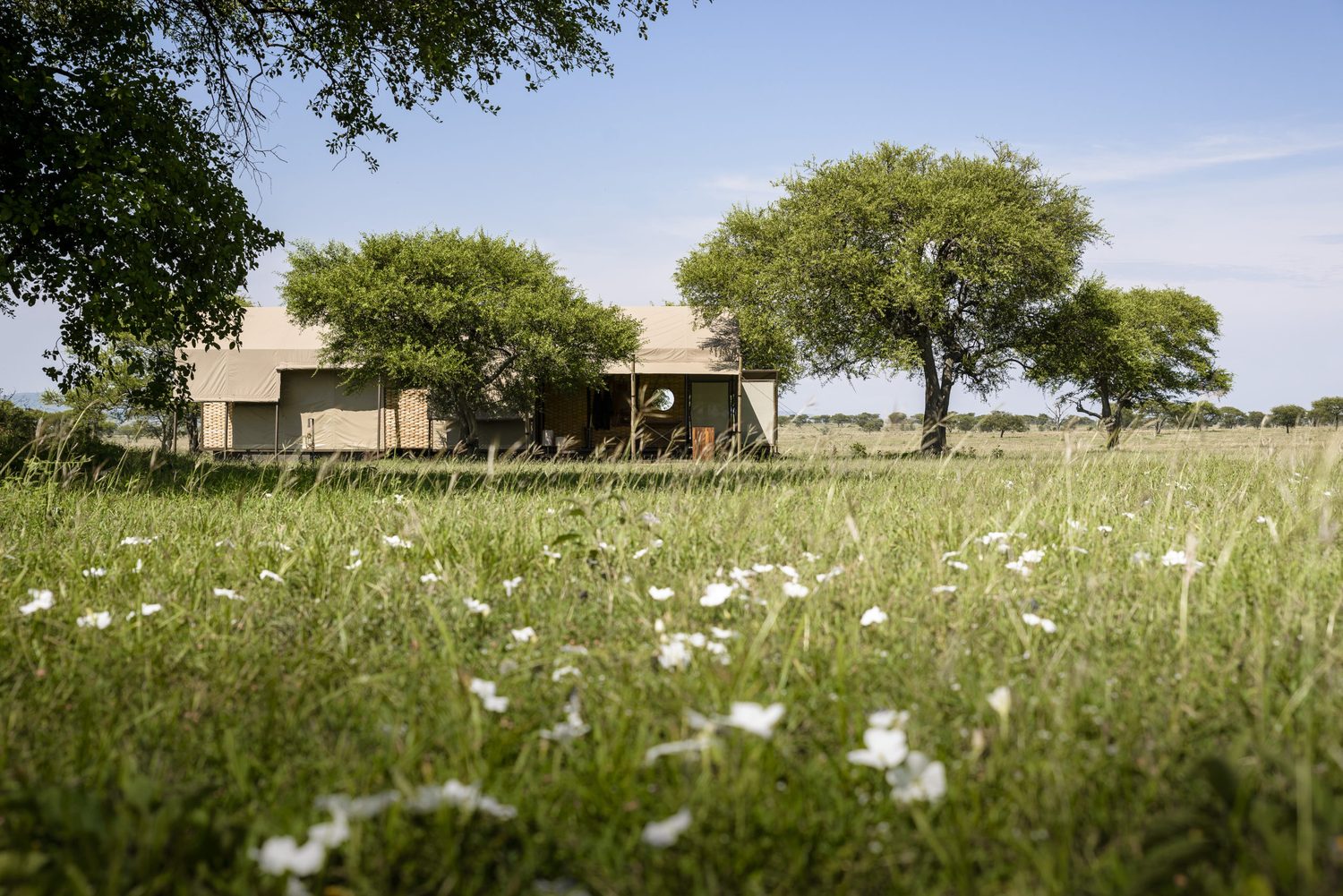
A permanent tented camp sets canvas suites on raised timber platforms, with ensuite bathrooms, proper beds and, at the top end, plunge pools and outdoor showers. The canvas is the point: it keeps the sounds of the night in the room with you. Cottar's 1920s Camp, in Kenya's Olderkesi Conservancy on the edge of the Maasai Mara, is a classic of the form, run by a safari company founded in 1919 and still in the same family five generations on.
Mobile Camps
A mobile camp has no permanent structures and moves through the year. &Beyond's Serengeti Under Canvas runs two camps of just nine tents each, on private campsites inside Serengeti National Park, relocating across the park to anticipate the Migration, from the river crossings in the north to the calving plains in the south. You still have an ensuite flushing toilet and an outdoor heated bucket shower.
Private Villas
A private villa, or exclusive-use house, is a whole property with its own staff, taken by one family or group. Singita Milele, on the Serengeti's western edge, sleeps up to ten across five bedrooms, with its own field guide, chef, butler and vehicle for private game drives.
Between these sit hybrids worth knowing. At Tswalu in the Kalahari, Loapi is six private safari homes under canvas, set at least a hundred meters apart, each with its own house manager and chef: villa privacy with the texture of a tented camp. For the family lodges and houses we would choose first, Tswalu among them, read Family Safari Lodges.

What Matters More Than the Category
After years of designing safaris and hearing how they went, we have learned that the category of accommodation matters less than four things people rarely ask about first.
The guiding. The difference between a competent guide and an extraordinary one will shape your safari more than any suite. Great guides read landscape, anticipate behavior, know when to stay silent, and understand that patience delivers more than mileage. The best properties hire, train and keep the best of them, which is one reason the same few names keep appearing in our itineraries.
The land around the lodge. Position beats amenities. A modest camp in a prime wildlife area will give you more than a spectacular property in a mediocre one. So does the kind of land it sits on. In a private concession or conservancy you can usually drive off-road to a sighting, go out after dark and walk, and the number of vehicles at a sighting is capped, typically at three to five. Inside many national parks, off-road driving, night drives and walking are restricted or not allowed, and the traffic is heavier. For how to tell the difference, read How to Choose a Conservation-Led Safari.
The conservation behind it. The best properties fund anti-poaching, habitat restoration and the communities around them. Your stay pays for the systems that keep these places intact, or it doesn't, and the difference is worth asking about.
The other guests. In a shared camp, the people around the fire shape the evening. Properties that draw curious, engaged travelers feel different from those drawing a checklist crowd. That isn't snobbery; the shared space is part of what you are paying for.
None of this appears on a star rating. It comes from knowing which properties employ the region's best guides, which invest in conservation rather than market it, and which attract the kind of travelers who make an evening better.

Control or Community: How You Want Days to Feel
A private villa gives you something rare in modern travel: complete control of rhythm. Breakfast can be at five or at nine. A drive can run six hours or forty minutes. One person stays back for the spa while the others walk. Your chef adjusts the menu to what worked yesterday, and your guide learns what your particular group loves. For multi-generational families and milestone celebrations, it is often the only format where nobody has to compromise.
The economics surprise people, because villas price by the house rather than by the head. On Singita's 2027 rates, Singita Milele runs from about $28,400 to $37,900 a night for up to ten guests, with the field guide, chef, butler, private vehicle, meals and drinks included and park fees extra. Full, that is roughly $2,800 to $3,800 per person per night, inside the range of a Singita lodge suite. Half full, the arithmetic turns against you. A villa is good value for a full house and an indulgence for a couple. The full arithmetic is in How Much Does a Luxury Safari Cost?, and our own selection is on the Private Safari Villas page.
But villas also isolate. You eat with the same people every night. There is no stranger at the fire who has been coming for thirty years and has just told you about a camp you'd never heard of, no dinner where the talk turns to anti-poaching because someone at the table actually does it.
Shared camps offer a different pleasure. At the top end they are small, usually somewhere between six and twenty suites, and most will set a private table whenever you want one. The fire after the evening drive becomes the place where stories accumulate. That suits solo travelers, couples who like people when people are optional, and anyone who travels partly to be surprised by a conversation. The trade is less control: activities and meals run to the camp's rhythm, however flexible, and you share it with whoever else is there.
Many of our travelers end up with both: a villa for the family chapter and a shared camp for the couple's, or a place like Loapi, where the house is yours and the reserve is shared.
Statement or Immersion: What You Notice
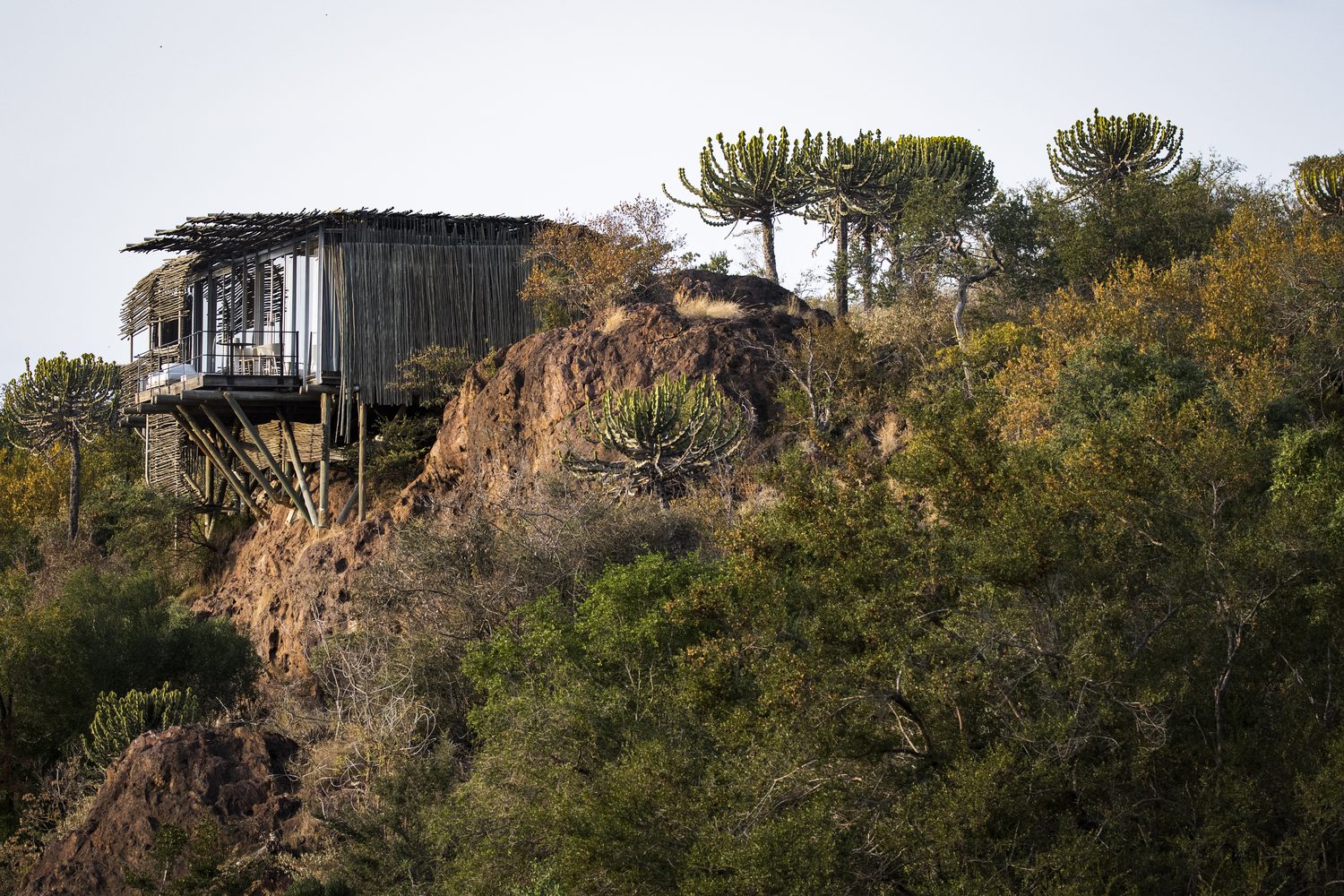
Some safari properties are architectural events. Singita Lebombo, in Kruger National Park, sets low-slung, glass-walled suites along a ridge above the river, so they seem to float between water and sky. Others reinterpret stone and thatch at monumental scale. These are places you remember as clearly as the wildlife, with interiors and wine cellars that hold their own against the best city hotels.
For travelers who usually choose hotels where the architecture matters as much as the address, these properties satisfy deeply. They prove that safari need not compromise on design. The cost is attention: you notice the building, you photograph it, and some evenings you talk about it more than about what lies beyond it.
Other properties practice disappearance. Canvas under trees. Local materials and traditional techniques, so the buildings feel inevitable rather than imposed. Layouts that make you look through and past rather than at. You remember the elephants drinking below the deck, not the deck.
Some travelers find that restraint exactly right, the kind of confidence that doesn't need to announce itself. Others feel faintly short-changed, as though they paid for luxury and didn't see enough of it. Both reactions are fair, and knowing which one you'll have matters more than pretending to be more evolved than you are. More in our South Africa safari guide.

Canvas or Stone: What You Hear at Night
The difference between a tented camp and a lodge isn't really construction. It's permeability: how much of Africa you want reaching you while you sleep.
Canvas carries sound. Rain arrives as texture rather than background. Birds at dawn come straight through the walls, and a lion calling at two in the morning sounds very close, because it may well be. Canvas also warms quickly in the sun and cools quickly in the shade, so you feel the shape of the day. For many travelers that is the entire point, and none of it costs comfort. At a camp like Cottar's the beds, linens, bathrooms and service are those of a fine hotel, with a veranda where a wall would be.
The honest caveat is that permeability runs both ways. Animals walk through unfenced camps, which is why a guide or camp guard walks you to your tent after dark, and why you stay inside once you're there. Most tents zip rather than lock. The rules are simple, and they exist because they work, but this is real wilderness, and some people lie awake listening rather than sleeping.
Solid lodges filter Africa. You sleep in silence unless you open a window, the temperature holds steady, and rain becomes a pleasant background. That isn't failure. For many people it is the condition for being fully present the next day, whether they need deep sleep, need climate control for health or age, or simply relax better behind walls.
River or Plains
The same question applies inside a single camp, and it is the one guests most often tell us afterward they wish they had asked. Suites facing a river or a waterhole are the ones people picture: elephants drinking below the deck at breakfast, a leopard on the far bank at dusk. They are also where the hippos are. A pod grunting and splashing beneath your deck is unforgettable for the first hour and a long night for a light sleeper, and water tends to bring more insects after dark. Suites facing the plains trade that for breadth: long views, game walking past in the open, and often more of a breeze. Neither is better, but they make for different nights. The river suites are usually the first to go, so we request specific suites when we book, and we ask you first whether you want the hippos. More in our Kenya safari guide.
Following or Fixed: Certainty and Surprise
Permanent camps and lodges offer reliability. The infrastructure works, the kitchen is fully equipped, and you can book eighteen months ahead knowing exactly what you'll find. That matters for first safaris, for families with complicated logistics, and for anyone for whom this is a once-in-a-lifetime trip.
But permanent camps can't move, and animals do. A position that is superb in the dry season, when water pulls wildlife close, can be ordinary in the green season, when the herds scatter across new grass.
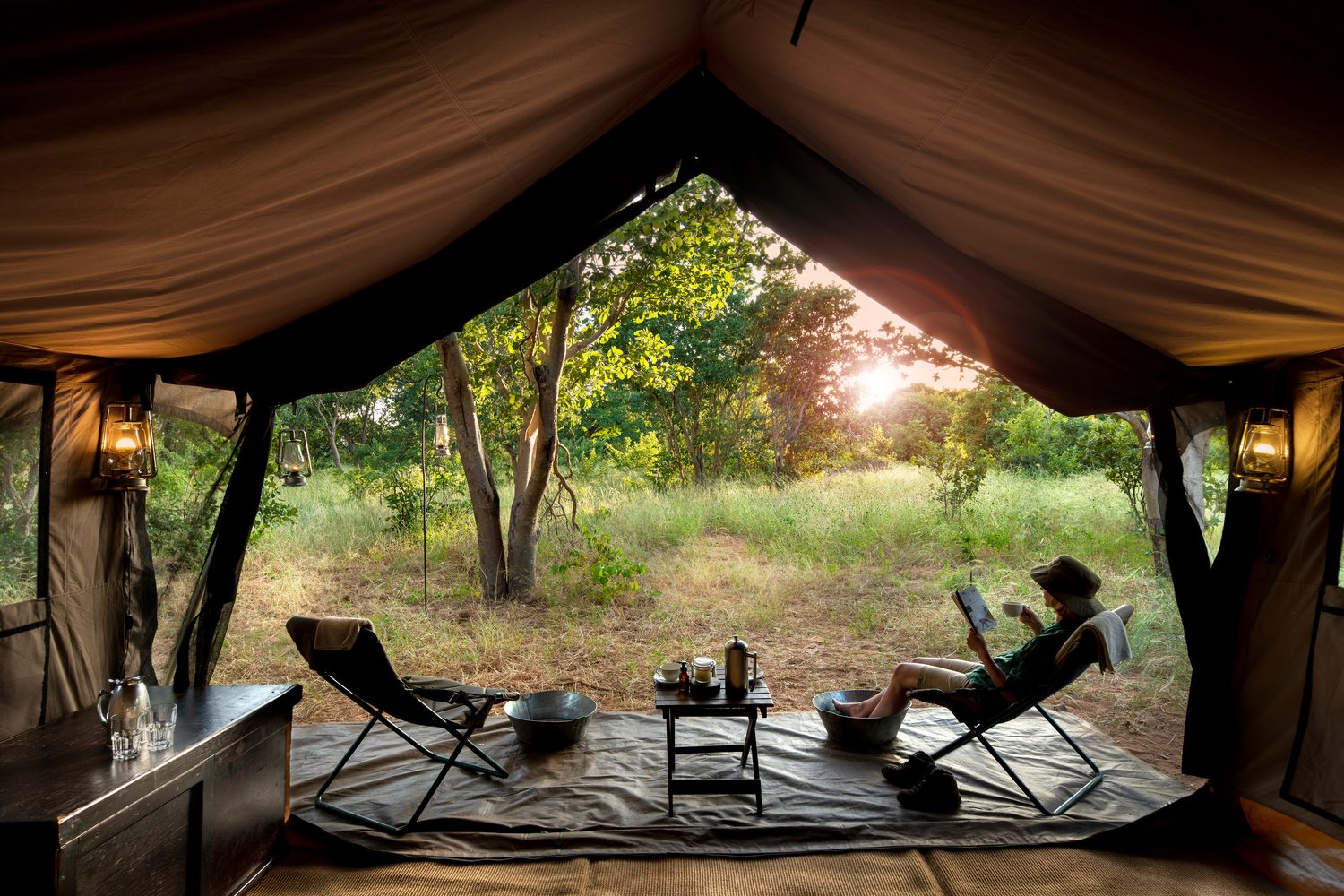
Mobile camps trade certainty for position. Serengeti Under Canvas relocates across the park through the year to anticipate the Migration, so in the right week you may wake with the herds already in view. The texture is simpler by design: a bucket shower rather than a rain head, canvas rather than glass, and a camp that leaves little behind when it moves. Some mobile camps close through the heaviest rains, typically April and May in East Africa.
First safaris often favor fixed reliability. Returning travelers often seek the mobile camps, having done the lodge circuit and wanting to go further in. More in our Tanzania safari guide.

How Many Camps, How Many Nights
Stay at least three nights in each place. On the first day you arrive and learn the land. On the second, your guide learns what you love. By the third, the property starts to show you what it keeps from people passing through. Three nights in one camp will almost always outperform one night in each of three, and longer stays often unlock better rates.
On a typical journey of nine to twelve days, that means two or three camps, sometimes four with a beach or a city at either end. Moving between them costs time, usually a transfer and a light-aircraft flight, so fewer, longer stays put more of your days into the safari itself rather than into getting there.
The sequence matters as much as the selection. We often design for contrast: a lodge or villa to arrive and adjust, a tented or mobile camp for the wild middle, and somewhere unhurried to finish, whether a beach, a vineyard or a villa where everyone can take in what they've seen. For how the whole journey fits together, read How to Plan an African Safari.

Where to Stay Questions, Answered
What is the difference between a safari lodge and a tented camp?
A lodge is a permanent building of stone, timber or glass, usually with air conditioning and the fullest amenities. A tented camp puts canvas suites on raised platforms with proper beds and ensuite bathrooms. At the luxury end the comfort is comparable; the real difference is how much of the bush you hear at night.
Are tented camps safe?
Yes, provided you follow the camp's rules. Animals move freely through unfenced camps, so a guide or camp guard walks you to your tent after dark and you stay inside once you're there. Canvas can feel exposed on the first night; by the second, most guests find the night sounds are what they remember.
What is a mobile safari camp?
A camp with no permanent structures that moves through the year to stay close to the wildlife, most famously the Great Migration in the Serengeti. The tents are still comfortable, with proper beds, ensuite toilets and bucket showers, but the appeal is position rather than amenities.
How many nights should you stay at each safari camp?
Three at minimum. It gives your guide time to learn what you love and gives the land time to show you more than its highlights. On a safari of nine to twelve days, that usually means two or three camps.
Is a private safari villa worth it?
For a family or group that fills it, often yes. Villas price by the house, so a full one can cost about the same per person as a top lodge suite while giving you your own guide, vehicle, chef and schedule. For a couple it is an indulgence. For families, there is more in Luxury Family & Multi-Generational Safaris.
Do safari lodges have Wi-Fi and air conditioning?
Most luxury lodges have both. Most luxury tented camps have Wi-Fi at least in the main areas, though ceiling fans are more common in tents than air conditioning. Mobile camps may have little connectivity or none, which some guests come to treat as a feature. We confirm the details for every camp in your proposal.

How We Match Properties to People
When we design an itinerary, we aren't booking rooms. We're matching places to the people traveling: your temperament, your pace, the ages around your table, and the kind of luxury that actually lands for you. Sometimes that means a villa that lets three generations each have their perfect morning. Sometimes it's a nine-tent camp that moves with the herds, or a glass suite above a river where you sleep in silence. Usually it is a sequence of two or three, chosen so that each makes the next one better. Tell us how you like your days to feel, and we'll tell you honestly where you should stay. Begin the conversation whenever you're ready.
The Printable Safari Packing Checklist
Four designed pages, free: the complete checklist, the landscape palette, packing by season, and traveling with children. Tell us where to send it.
Read Further




Ready to Find Your Place?
Tell us how you want the space around you to feel. We'll match properties to your temperament, not just your budget.

" height="6.799809999999999px" id="UnPIFpqy2" transform="translate(4.733 4.667)" width="6.799800000000001px"/><path d="M 0.8 0 C 1.267 0 1.6 0.4 1.6 0.8 C 1.6 1.267 1.266 1.6 0.8 1.6 C 0.333 1.6 0 1.267 0 0.8 C 0 0.334 0.333 0 0.8 0 Z" fill="rgb(165, 176, 170)" height="1.6000999999999999px" id="wjKJl84P4" transform="translate(10.867 3.733)" width="1.6000999999999994px"/><path d="M 7.333 0 C 8.533 0 8.8 0.067 9.4 0.067 C 10.467 0.134 11.466 0.4 12.2 1.133 C 12.933 1.867 13.2 2.867 13.267 3.934 C 13.333 4.533 13.333 4.8 13.333 6 L 13.333 7.333 C 13.333 8.533 13.267 8.8 13.267 9.4 C 13.2 10.467 12.933 11.467 12.2 12.2 C 11.466 12.933 10.467 13.2 9.4 13.267 C 8.8 13.333 8.533 13.334 7.333 13.334 L 6 13.334 C 4.8 13.334 4.533 13.267 3.933 13.267 C 2.8 13.2 1.867 12.933 1.133 12.2 C 0.4 11.467 0.133 10.467 0.066 9.4 C 0 8.8 0 8.533 0 7.333 L 0 5.934 C 0 4.734 0.066 4.467 0.066 3.867 C 0.066 2.8 0.333 1.867 1.133 1.067 C 1.867 0.334 2.8 0.067 3.866 0.067 C 4.466 0 4.733 0 5.933 0 Z M 6.666 1.2 C 4.933 1.2 4.733 1.267 4 1.267 C 3.266 1.333 2.533 1.467 2 2 C 1.466 2.533 1.333 3.267 1.267 4 C 1.2 4.667 1.2 4.867 1.2 6.667 C 1.2 8.4 1.2 8.6 1.267 9.333 C 1.333 10.067 1.466 10.8 2 11.333 C 2.533 11.867 3.266 12 4 12.067 C 4.666 12.134 4.866 12.133 6.666 12.133 C 8.4 12.133 8.6 12.067 9.333 12.067 C 10.066 12 10.8 11.867 11.333 11.333 C 11.866 10.8 12 10.067 12.066 9.333 C 12.133 8.6 12.133 8.4 12.133 6.667 C 12.133 4.934 12.066 4.733 12.066 4 C 12 3.267 11.866 2.533 11.333 2 C 10.8 1.467 10.066 1.333 9.333 1.267 C 8.666 1.2 8.466 1.2 6.666 1.2 Z" fill="rgb(165, 176, 170)" height="13.3335px" id="W1sWTdVhE" transform="translate(1.467 1.467)" width="13.33300001940264px"/></svg>)
" height="12.000010000000001px" id="Px7drxAPR" transform="translate(4.133 2.134)" width="7.53329px"/></svg>)
" height="13px" id="RXaPy7s6t" transform="translate(0.838 1.5)" width="14.381208999999998px"/></svg>)
" height="11.99998861028647px" id="xgm2Ladnt" transform="translate(2.036 2)" width="11.92787px"/></svg>)
" height="9.26662px" id="tz2Esvrs4" transform="translate(1.467 3.567)" width="13.333300000000001px"/></svg>)