The Fundamentals
African Safari Clothing & Packing List
Pack light. Look good. Remember everything.
By Hans Arnesen, Founder of Reverie Safaris · Updated September 2026
Short on time? Jump to the packing checklist or download the free printable PDF.
African Safari Clothing & Packing List
Pack light. Look good. Remember everything.
Planning what to wear on an African safari? This guide covers safari clothing and a complete packing list: what works, what doesn't, and why, from colors and layering to camera gear, health items, and bush-flight weight limits. Whether you're heading to Kenya's Maasai Mara, Botswana's Okavango Delta, or tracking gorillas in Rwanda, knowing what to pack makes the difference between fumbling through your duffel at dawn and stepping confidently into the wild.
There's a photograph from every great safari that lives longer than the others. Not the leopard in golden light or the elephant at the waterhole, though those matter. It's the one of you: dust on your boots, scarf loose around your neck, that jacket you debated bringing now essential in the morning cold. You're laughing at something the guide said, or you've gone quiet watching the plains catch fire at dusk, and the camera catches you mid-thought. Years later, you'll look at that image and remember not just where you were, but how it felt to be exactly that person in exactly that place.
Safari style isn't about fashion; it's about looking like you belong there. Neutral tones that don't spook wildlife. Layers that adapt to 40-degree temperature swings. Fabrics that breathe, dry fast, and somehow look better with dust on them. The best-dressed travelers aren't the ones who packed the most; they're the ones who packed with intent.
When you're ready to pack from paper, the complete checklist from this guide is yours as a designed, printable PDF below. If you're planning your journey alongside this, see How to Plan an African Safari. For timing your trip to the seasons, read Best Time to Go on Safari.

The Short Answer
Pack light, soft and neutral: three long-sleeve shirts, two or three pairs of safari pants, a fleece and a packable down jacket for dawn, broken-in walking shoes and sandals, a wide-brimmed hat, and more sunscreen than seems reasonable. Camps launder daily, so you need far less than you think.
It all has to fit a soft duffel within the bush-flight limit of 33–44 pounds per person, including your hand luggage and camera bag. Leave camouflage, blue and black, and bright white at home. The full checklist is below, and the printable PDF is yours to download.

The Philosophy: Less Is Luxury
Safari packing is minimalism with purpose. You're building a capsule where every piece works with every other piece, where nothing announces itself, and where you could walk into a five-star lodge or onto a dusty airstrip and look equally at home.
The secret that changes everything: luxury camps wash and press your clothes daily. This isn't a hotel service; it's part of the rhythm. Hand over your dusty shirt in the morning and it returns pressed and perfect by evening. You don't need seven shirts. You need three excellent ones on rotation.
What to Wear on an African Safari
Safari dressing comes down to three decisions: color, layers, and fit. Get those right and everything else follows, from how the wildlife reacts to you to how the photographs age.
Bright colors spook animals. White shows every speck of dust within seconds. Blue and black attract tsetse flies in certain regions, and the flies are not particular about the shade. Your palette: khaki, sand, olive, taupe, soft grey, cream. Occasionally a muted rust or sage green. That's it. Save the cobalt linen shirt for Zanzibar.
The look is vaguely military-adjacent without costume. You're not cosplaying Out of Africa; you're dressing for a place where the landscape is the main character and you're a respectful guest.

What Women Should Wear on Safari
The same landscape capsule as everyone, tuned to how days actually run. Long-sleeve shirts and well-cut safari pants for drives; a linen shirtdress or easy smart-casual outfit for dinner, where camps are elegant but never formal. A lightweight scarf earns its place three times over: warmth at dawn, dust on the road, and instant polish over a t-shirt at night.
A supportive sports bra matters more than anyone mentions; game-drive roads are famously bumpy. And leave the heels at home entirely. Camp paths are sand, stone, and raised walkways, and sandals that move from pool deck to dinner handle every evening beautifully.

What Men Should Wear on Safari
Three breathable long-sleeve button-downs, sleeves rolled to taste; two or three pairs of quick-dry safari pants that fit well enough to photograph; one pair of chinos or dark jeans for travel days and cooler evenings. Add a fine sweater or fleece under a packable down jacket for dawn drives, and one collared shirt that reads slightly dressier for dinner.
The register is relaxed: no jacket required at any camp we book, and shorts are welcome at the pool and at lunch. If it looks like you bought it specifically for this trip, leave it at home. If it looks like you've owned it for years, it's right.

Safari Shoes & Boots: What Actually Works
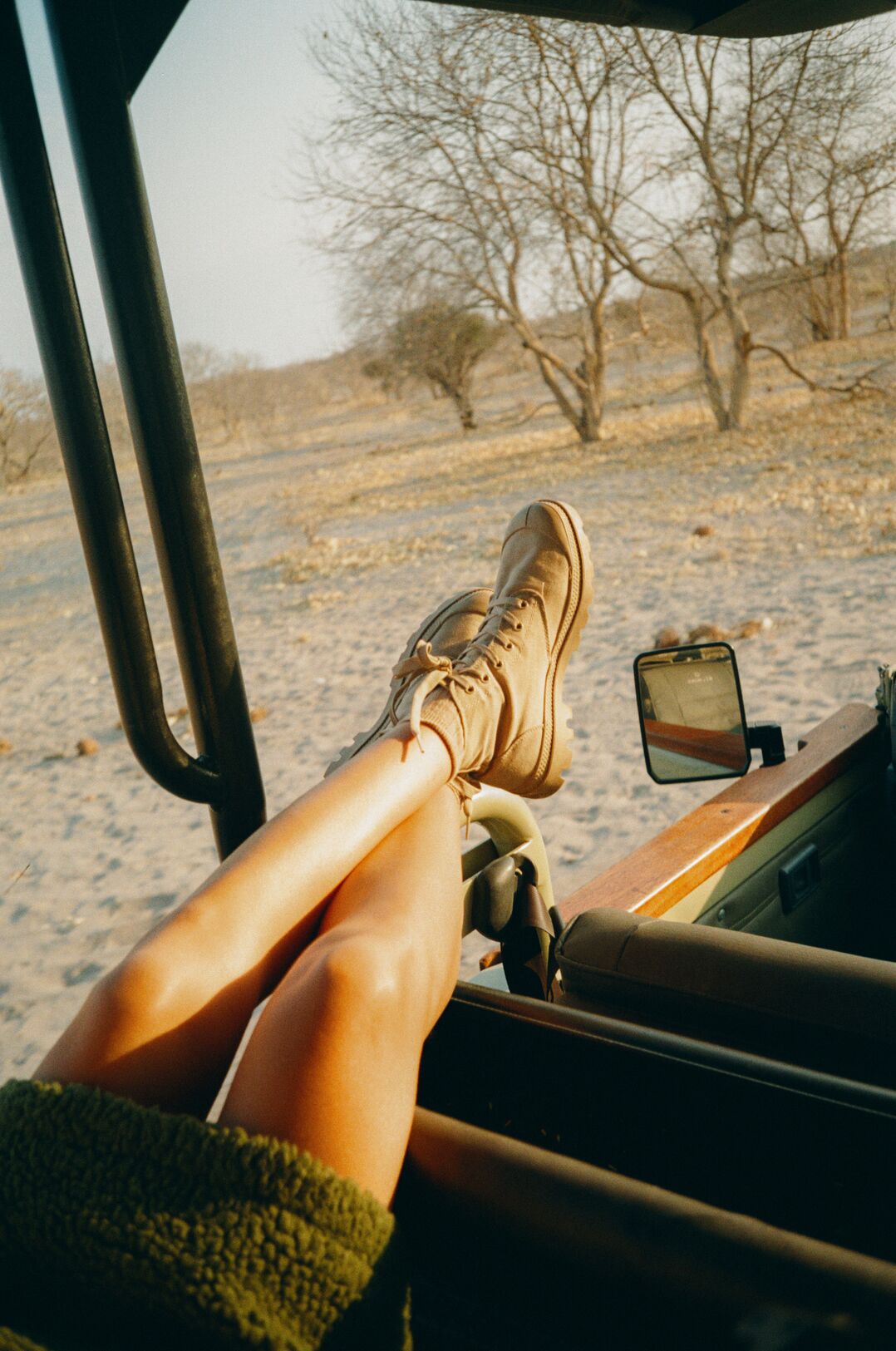
Two pairs cover the entire continent. First, comfortable walking shoes or light hiking boots, already broken in; you'll live in them from the first game drive to the last airstrip. Ankle support is welcome, technical stiffness is not, and complicated lacing grows tiresome when you're in and out of the vehicle all day. Second, one versatile pair of sandals for camp: pool deck, lunch, dinner.
Trail runners work well if boots feel like overkill. What matters is that nothing is new; blisters are the one souvenir nobody wants. If you're deciding between boots and shoes, choose whichever you'd happily wear for a full airport day, then stop thinking about it.
Layering for Safari: Dressing for a 40-Degree Swing
Safari temperature swings are absurd. You'll layer, shed, and layer again, sometimes three times before lunch. Start with a lightweight base layer in merino wool or technical fabric that wicks moisture and dries fast. Add a breathable long-sleeve button-down in linen or a cotton-linen blend; these protect from sun while letting air move. For insulation, pack a lightweight sweater or quality fleece. Your outer layer is a packable down jacket for dawn drives.
The strategy: everything pairs with everything. Olive pants, sand shirt, grey sweater. Khaki pants, cream shirt, olive jacket. You're getting dressed in the dark at 5:45 AM and looking good accidentally.
What to Pack for an African Safari (the Essential Edit)
Everything below fits comfortably inside the bush-flight allowance, with room left over for what comes home with you. Three long-sleeve button-downs are your workhorses: breathable fabrics with rolled sleeves and relaxed fits. Collars protect your neck; long sleeves prevent sunburn and insect bites without thinking about it. Add two to three short-sleeve shirts for afternoon downtime when heat settles in.
For bottoms, two to three pairs of safari pants in quick-dry fabric with pockets. Look for something cut well enough to photograph beautifully; avoid the "I bought these specifically for this trip" look. Add two pairs of comfortable shorts for camp and pool time. One pair of jeans or chinos for travel days and cooler evenings completes the foundation. Pack one versatile dress or smart-casual outfit; safari camps are surprisingly elegant at dinner, with lantern-lit tables and wine, but it's relaxed elegance.
The accessories that matter: a wide-brimmed hat with chin strap for windy drives, one good pair of polarized sunglasses, and a lightweight scarf or pashmina that serves as dust protection, warmth, and instant elegance over a t-shirt at dinner. A small day bag for camera and daily essentials, and quality sunscreen in quantities that seem excessive but aren't. Skip the water bottle; every camp keeps you supplied, and most hand you their own refillable for game drives.

The African Safari Packing Checklist
Every item from this guide, in one place. Work from the list here, or download the designed, printable PDF below and pack from paper.
Clothing
3 long-sleeve button-downs – breathable linen or blends
2–3 short-sleeve shirts for afternoon downtime
2–3 safari pants – quick-dry, well cut, real pockets
2 pairs of shorts for camp and pool
1 pair of jeans or chinos – travel days, cool evenings
1 versatile dress or smart-casual outfit for dinners
Lightweight base layer – merino or technical
Sweater or fine fleece
Packable down jacket for dawn drives
A supportive sports bra – game-drive roads are famously bumpy
Swimsuit, sleepwear, underwear & socks (merino blend)
Footwear
Walking shoes or light boots – already broken in
1 versatile pair of sandals – pool deck to dinner
Accessories
Wide-brimmed hat with chin strap for open vehicles
Polarized sunglasses
Warm beanie & gloves – dawn drives start colder than you expect
Lightweight scarf or pashmina – dust, warmth, elegance
Small soft day bag for camera and essentials
Soft duffel bag – required for bush flights (about 55 L, up to 24 in long, no wheels or frame)
Health & Sun
High-SPF sunscreen – more than seems reasonable
SPF lip balm
Insect repellent – 20%+ DEET or picaridin
Yellow fever certificate if your route requires it - we'll confirm
Malaria prophylaxis for most safari regions – your physician decides
Prescriptions in original containers + small first-aid kit
Antihistamine, anti-diarrheal, motion-sickness tablets
Hand sanitizer & wet wipes
Eye mask & earplugs – the sleep difference-maker
Photography & Tech
Camera, extra batteries, multiple memory cards
Portable charger (carry-on only) + universal adapter
Headlamp with red-light mode
Lens cleaning kit – dust is constant
AirTag or tracker in each checked bag
Binoculars only if you're particular – camps provide
Documents & Money
Passport – valid 6+ months, 2–3 blank pages per entry
Visa & eTA approvals, printed – Kenya requires an eTA
Copies stored separately + digital backups
Travel insurance with evacuation – details at hand
Two credit cards – Visa + Mastercard, not just Amex
Crisp, post-2009 US bills for unplanned moments
Verify health requirements for your exact route at cdc.gov and travel.state.gov, and let your physician or a travel clinic make the medical calls at least a month before you fly.

What Not to Bring on Safari
Leave camouflage clothing at home; it's illegal in some African countries and discouraged everywhere else. Plastic bags are banned in Kenya, Tanzania, Rwanda, and Botswana. White or bright clothing shows dirt instantly and photographs poorly. Skip heavy cotton jeans that won't dry, excessive jewelry that creates anxiety, and brand-new boots that haven't been broken in. Hard-shell luggage is banned on most bush flights. Most national parks prohibit drones without permits that are difficult to obtain, and drones can be held at customs on arrival.
Bush Flights & Luggage Weight Limits
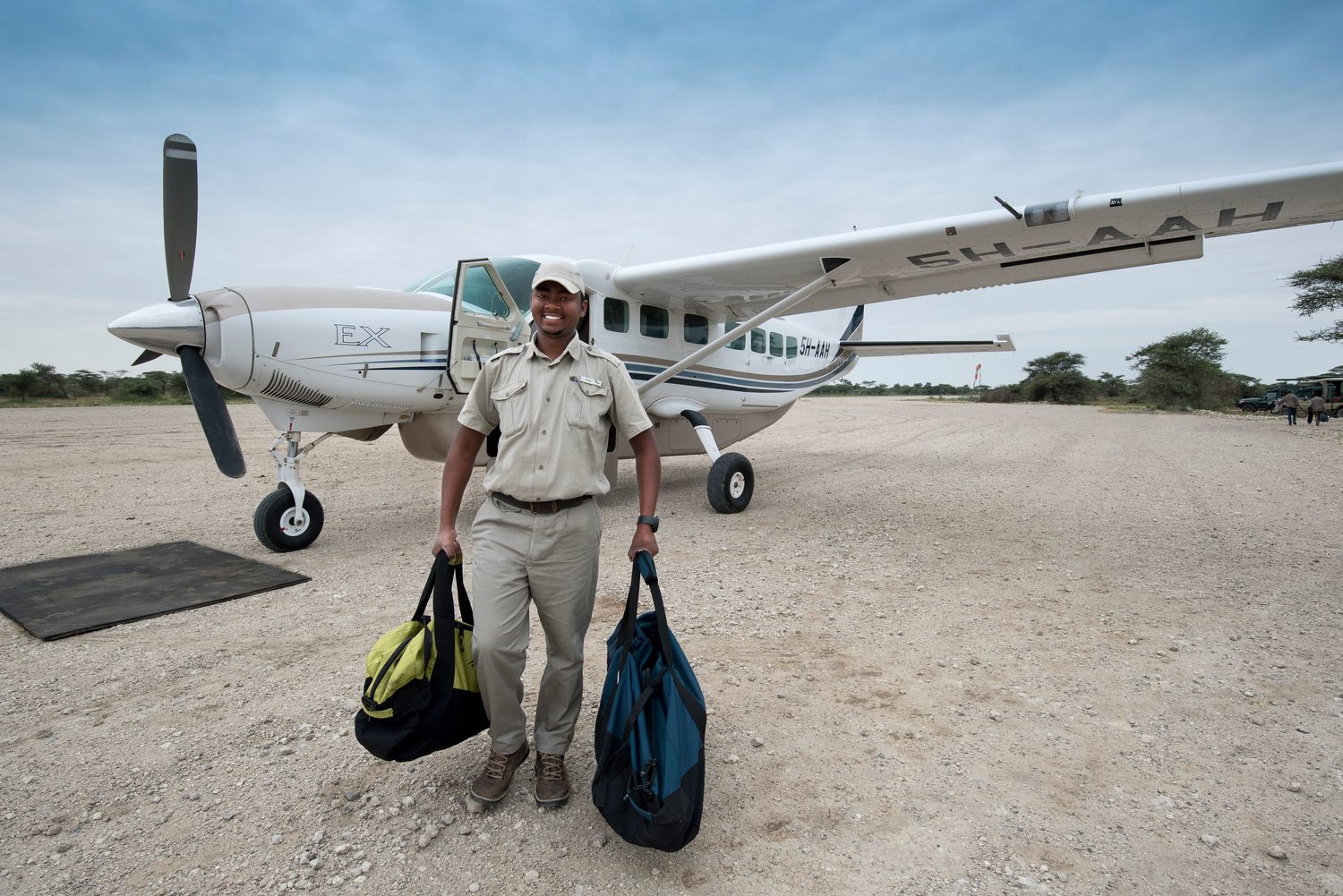
Bush planes impose strict reality: 33–44 pounds per person in total, including your hand luggage and camera bag, in a soft duffel. That total is the part people get wrong; on most bush carriers the limit is inclusive, not a checked allowance with a carry-on on top. Hard-shell suitcases are banned; wheels, frames and rigid sides don't fit holds that can be as little as ten inches high, and overweight bags get left behind. Scheduled regional jets such as Airlink are the exception and do take ordinary suitcases.
The bag itself should be a soft duffel of about 55 liters, no more than 24 inches long, with no wheels or frame. If you travel with a heavy camera kit, ask us to pre-book extra weight or a seat for it, which has to be arranged before the day rather than at the airstrip. Soft duffels compress and forgive. Drop an AirTag or Tile tracker in each checked bag, essential for multi-leg journeys where bags sometimes take scenic routes of their own, and wear your heaviest items while traveling: boots, jacket, jeans. Save the precious weight for what actually matters.

Packing by Season and Destination
Southern Africa. Dry season runs May through October, with dramatic swings from 45°F dawns to 90°F afternoons and winter mornings that can touch 30°F. Lead with warm layers and serious sun protection. Green season, November through April, brings mild mornings around 65°F, afternoons in the high 80s, and storms that break the heat rather than build it. Camps and vehicles keep ponchos ready, so your own rain shell is optional.
East Africa. Altitude sets the thermometer here, not latitude. The dry months, June through October and again in January and February, run 45 to 60°F at dawn and climb into the 70s and low 80s; a fleece and light down are plenty, even on the Ngorongoro rim. The green months, March through May and November through December, start at 50 to 65°F with afternoons in the same range. April's long rains can set in for hours, so a light rain shell is worth packing.
What to Wear on Safari in Tanzania
The northern circuit sits at altitude: the Ngorongoro Crater rim can drop near freezing at dawn, even in dry season. Pack the full layering system, add a warm hat, and keep the down jacket in your day bag rather than your duffel. Serengeti dust is real; a neck gaiter or bandana earns its place. More in our Tanzania safari guide.
What to Wear on Safari in Kenya
The Maasai Mara and Laikipia run cooler than the equator suggests, at five to six thousand feet. Dawn drives want every layer you brought; afternoons settle into the 70s and low 80s. Dust is the Mara's signature, so sunglasses do double duty and the scarf becomes your most-used item. More in our Kenya safari guide.
What to Pack for a South Africa or Botswana Safari
Southern Africa's winter, May through September, is genuinely cold: mornings can hit 30°F in the Sabi Sand, the Okavango, and the Kalahari. This is where serious insulation earns its place: the down jacket, a warm hat, gloves for the first hour. Summer flips to hot with afternoon storms. Bush-flight limits bind tightest on Okavango circuits; the soft duffel is non-negotiable. More in our South Africa and Botswana guides.
What to Pack for Gorilla Trekking (Rwanda & Uganda)
The better lodges lend gaiters, rain gear and walking sticks. Bring your own broken-in waterproof boots, garden gloves for grabbing vegetation, and thick long pants. It's wet, steep, and muddy in a way a game drive never is; quick-dry everything. More in our Rwanda & Uganda guide.

Packing for Children
The same landscape palette, sized down, plus a short list that keeps young travelers comfortable through early mornings and long golden afternoons.
Long-form birth certificates for Botswana and Namibia
Their own layers, since dawn cold surprises children most
Child-size binoculars, because ownership changes everything
A hat that actually stays on in an open vehicle
A journal and colored pencils for the quiet hours
Familiar snacks for the long stretches
Children's motion-sickness tablets, and their own small flashlight
Repellent for children, picaridin or lower-strength DEET, on your pediatrician’s advice
Their own water bottle is optional; camps provide one
The rest of planning a journey around children, from villa layouts to minimum ages, is in Luxury Family & Multi-Generational Safaris.

The Reality No One Mentions
Dust happens. Your clothes will get dusty. You'll shake them out, the camp will wash them, they'll get dusty again. This is normal and part of the texture of being there.
Layers live in the vehicle. Keep a fleece or down jacket, and a scarf, in your game drive bag. You'll grab them without thinking when the sun drops or the wind picks up. And don't stress about rain; vehicles carry ponchos, and camps hand them out the moment clouds build. A packable shell of your own is a nice-to-have, not a must.
Boots stay on. You're in and out of vehicles all day. Skip complicated lacing systems and focus on ease and comfort over technical perfection. Morning temperatures shock everyone. Even if you're traveling in summer months, dawn drives start cold. That down jacket you debate bringing becomes your favorite possession by day two.

Dressing for Photographs
The photographs from your safari will live longer than you expect. They'll be framed, shared, and revisited during dinner parties decades from now. Wear what feels like you. Don't suddenly become a different person because you're in Africa. If you never wear cargo pants at home, don't start now.
Texture photographs beautifully: linen, cashmere, worn leather. These materials catch light and tell stories. Busy patterns compete with landscape; simple cuts let the setting shine. Well-fitted clothes photograph better than baggy or tight. Aim for relaxed, not rumpled. Accessories add life to images: a good hat, a scarf catching wind, sunglasses pushed up into your hair. The best safari photos capture you mid-laugh, mid-thought, unposed. Dress well, then forget about it.

Money & Documents
Gratuities are included in our proposals, every one of them, guides to porters, so tipping asks nothing of your wallet along the way. If someone makes your journey and you'd like to add something personal, that's entirely yours; never expected. A small fold of crisp, post-2009 US bills is still worth carrying for the moments outside your itinerary: airport carts, roadside stops, the unplanned. Pack two credit cards, Visa and Mastercard rather than Amex alone, for broader acceptance. Your passport needs six months' validity beyond travel dates and two to three blank pages per entry; Namibia requires six consecutive blank pages alone. Print your visa and eTA approvals rather than leaving them on a phone; Kenya requires an eTA.
Carry copies of all important documents stored separately from originals, plus digital backups in cloud storage. Travel insurance with evacuation cover, and its emergency contact numbers, should be easily accessible.

Health & Sun Protection
Two items belong on the list before any of it: a yellow fever certificate if your route requires it (we'll confirm as we plan it), and malaria prophylaxis, which applies across most safari regions; your physician decides. Verify requirements for your exact route at cdc.gov and travel.state.gov, and let your doctor or a travel clinic make the medical calls at least a month before you fly.
High SPF sunscreen is non-negotiable; you're at altitude, near the equator, in reflected light all day. Bring more tubes than seems reasonable. Pack lip balm with SPF because your lips will crack in dry climates. A basic first aid kit, personal prescriptions in original containers, insect repellent with 20 percent or more DEET or picaridin, antihistamine, anti-diarrheal medication, and motion sickness tablets cover most situations. Hand sanitizer and wet wipes become essential when water isn't available: after dusty drives, before roadside breakfasts, during long days between camps.
Eye mask and earplugs are non-negotiable for quality sleep. Early morning bird calls start well before your alarm. Canvas tents amplify wind at night. You'll move between multiple camps with different ambient sounds. These small items make the difference between exhausted and rested, and rested travelers enjoy safari more. Most luxury camps provide excellent toiletries, but if you're particular about skincare or have specific needs, bring travel sizes in biodegradable formulations when possible.

Photography & Technical Essentials
A camera with extra batteries and multiple memory cards. Most camps keep a pair of binoculars per couple in the vehicle; bring your own only if you're particular about your glass (8x32 or 8x42 if you are). A portable charger for devices between camps, which airlines require in your carry-on rather than in checked luggage. Universal adapter, because Africa uses multiple plug types. Headlamp or small flashlight with a red-light option that preserves night vision. Lens cleaning kit, because dust is constant and inevitable. For detailed photography guidance, see Safari Photography Guide.

Safari Packing Questions, Answered
How much luggage can I bring on safari?
Bush flights allow 33–44 pounds per person in a soft duffel, and on most carriers that figure includes your hand luggage and camera bag rather than sitting on top of them. Hard-shell suitcases don't fit the cargo holds and get left behind. Wear your heaviest items on travel days, and remember camps launder daily; you need far less than you think.
Can you wear light blue on safari?
Better not to. Blue draws tsetse flies, and the flies are not particular about the shade, so in tsetse country, which includes parts of Tanzania, Zambia, Zimbabwe and Botswana's woodland, blue belongs at home alongside black. Khaki, sand, olive, stone, cream and sage never raise the question. Save the blue linen for Zanzibar.
What colors should you avoid on safari?
Camouflage (illegal in several African countries), blue and black, white, and anything bright. Your palette: khaki, sand, olive, stone, cream, sage, muted rust, soft grey, and earth tones.
What shoes should you wear on safari?
Two pairs is plenty: broken-in walking shoes or boots for drives and walks, and sandals that move from pool deck to dinner. Skip complicated lacing; you're in and out of a vehicle all day. Never bring brand-new boots.
What should women wear on safari?
The same neutral capsule as everyone, plus a dress or smart-casual outfit for dinner; camps are elegant but relaxed. A linen shirtdress does double duty. A scarf adds warmth on dawn drives and dresses up a t-shirt at night. A supportive sports bra matters more than people expect; game-drive roads are famously bumpy.
Can you wear dresses or shorts on safari?
Yes. Shorts are for camp and afternoons; long sleeves and long pants protect from sun and insects on drives. A dress works beautifully at dinner and, in light fabric, during the day.
What's the best bag for safari?
A soft-sided duffel that compresses, about 55 liters, no more than 24 inches long, with no wheels or frame. Hard-shell luggage is banned on most bush flights. Put a tracker in every checked bag; on multi-leg journeys, bags occasionally take scenic routes of their own.
Do safari camps do laundry?
Yes, daily and included in the rate, and it changes how you pack. Luxury camps launder and press as part of the rhythm: hand a dusty shirt over in the morning and it returns pressed by evening. Three excellent shirts on rotation beat seven good ones.
What should I wear on safari in Tanzania and Kenya?
Both run colder than the latitude suggests thanks to altitude; a packable down jacket earns its space on every dawn drive. The Maasai Mara and Serengeti make serious dust, so add a bandana or neck gaiter.
Do I need my own binoculars?
Only if you care about the glass. The camps we book keep binoculars in the vehicle. If you're particular, 8x32 or 8x42 is the sweet spot.
What do I need to pack for gorilla trekking?
The better lodges lend gaiters, rain gear and walking sticks. Bring your own broken-in waterproof boots, garden gloves for grabbing vegetation, and thick long pants. It's wet, steep, and muddy in a way a game drive never is.
The Last Word
Pack light, dress like the landscape, and let us handle the rest: every gratuity included, every transfer arranged, every question answered before you thought to ask it. The printable checklist below travels well; so do we. If you are ready to begin, start with How to Plan an African Safari, or simply reach out and we will start with a conversation.
The Printable Safari Packing Checklist
Four designed pages, free: the complete checklist, the landscape palette, packing by season, and traveling with children. Tell us where to send it.
Read Further



The Last Word
Now that packing's sorted, let's plan the journey itself. Tell us where you want to go and we'll handle everything else.

" height="6.799809999999999px" id="UnPIFpqy2" transform="translate(4.733 4.667)" width="6.799800000000001px"/><path d="M 0.8 0 C 1.267 0 1.6 0.4 1.6 0.8 C 1.6 1.267 1.266 1.6 0.8 1.6 C 0.333 1.6 0 1.267 0 0.8 C 0 0.334 0.333 0 0.8 0 Z" fill="rgb(165, 176, 170)" height="1.6000999999999999px" id="wjKJl84P4" transform="translate(10.867 3.733)" width="1.6000999999999994px"/><path d="M 7.333 0 C 8.533 0 8.8 0.067 9.4 0.067 C 10.467 0.134 11.466 0.4 12.2 1.133 C 12.933 1.867 13.2 2.867 13.267 3.934 C 13.333 4.533 13.333 4.8 13.333 6 L 13.333 7.333 C 13.333 8.533 13.267 8.8 13.267 9.4 C 13.2 10.467 12.933 11.467 12.2 12.2 C 11.466 12.933 10.467 13.2 9.4 13.267 C 8.8 13.333 8.533 13.334 7.333 13.334 L 6 13.334 C 4.8 13.334 4.533 13.267 3.933 13.267 C 2.8 13.2 1.867 12.933 1.133 12.2 C 0.4 11.467 0.133 10.467 0.066 9.4 C 0 8.8 0 8.533 0 7.333 L 0 5.934 C 0 4.734 0.066 4.467 0.066 3.867 C 0.066 2.8 0.333 1.867 1.133 1.067 C 1.867 0.334 2.8 0.067 3.866 0.067 C 4.466 0 4.733 0 5.933 0 Z M 6.666 1.2 C 4.933 1.2 4.733 1.267 4 1.267 C 3.266 1.333 2.533 1.467 2 2 C 1.466 2.533 1.333 3.267 1.267 4 C 1.2 4.667 1.2 4.867 1.2 6.667 C 1.2 8.4 1.2 8.6 1.267 9.333 C 1.333 10.067 1.466 10.8 2 11.333 C 2.533 11.867 3.266 12 4 12.067 C 4.666 12.134 4.866 12.133 6.666 12.133 C 8.4 12.133 8.6 12.067 9.333 12.067 C 10.066 12 10.8 11.867 11.333 11.333 C 11.866 10.8 12 10.067 12.066 9.333 C 12.133 8.6 12.133 8.4 12.133 6.667 C 12.133 4.934 12.066 4.733 12.066 4 C 12 3.267 11.866 2.533 11.333 2 C 10.8 1.467 10.066 1.333 9.333 1.267 C 8.666 1.2 8.466 1.2 6.666 1.2 Z" fill="rgb(165, 176, 170)" height="13.3335px" id="W1sWTdVhE" transform="translate(1.467 1.467)" width="13.33300001940264px"/></svg>)
" height="12.000010000000001px" id="Px7drxAPR" transform="translate(4.133 2.134)" width="7.53329px"/></svg>)
" height="13px" id="RXaPy7s6t" transform="translate(0.838 1.5)" width="14.381208999999998px"/></svg>)
" height="11.99998861028647px" id="xgm2Ladnt" transform="translate(2.036 2)" width="11.92787px"/></svg>)
" height="9.26662px" id="tz2Esvrs4" transform="translate(1.467 3.567)" width="13.333300000000001px"/></svg>)