Life on Safari
Safari Wildlife Encounters
The moments that silence everything else.
By Hans Arnesen, Founder of Reverie Safaris · Updated September 2026
Safari Wildlife Encounters
The moments that silence everything else.
There's a sighting our guides still talk about. A family arrived wanting the Big Five. They had been very specific about it, had the list ready, and meant to work through it. By the third day they had four: lion, leopard, elephant, buffalo. They needed only a rhino to complete the set.
Then they found a mud wallow.
Nothing dramatic, nothing rare. A dip in the ground where rain had collected, and a warthog mother with four young ones engaged in what can only be called play: chasing, slipping, mock-fighting, one of them trying again and again to climb onto its mother's back and sliding off. She was endlessly patient, nudging one back into line now and then, mostly just watching while her offspring worked out physics and sibling rank.
The family stayed for two hours and forgot about the rhino entirely. That evening they could barely describe what they'd seen, except to say they finally understood what people mean when they say safari changes you. It wasn't rarity; warthogs are everywhere. It wasn't drama; nobody was hunting anyone. It was time: enough of it to see intelligence, family and something like joy in an animal most people dismiss as ugly.
They saw a rhino the next day. They photographed it. It was fine. The warthog morning was the story they told for years.
That is what people misunderstand about wildlife on safari. They measure success by what they saw rather than how they saw it. The extraordinary safaris aren't about the rarest animals. They're about meeting any animal, common or iconic, with enough time and attention to see it properly. No one can promise you a particular sighting, and anyone who does is selling something other than wilderness. What we can do is create the conditions, and this guide is about those conditions.
For where each animal is at its best, see Safari Destinations. For timing around the herds and the seasons, read Best Time to Go on Safari.

The Short Answer
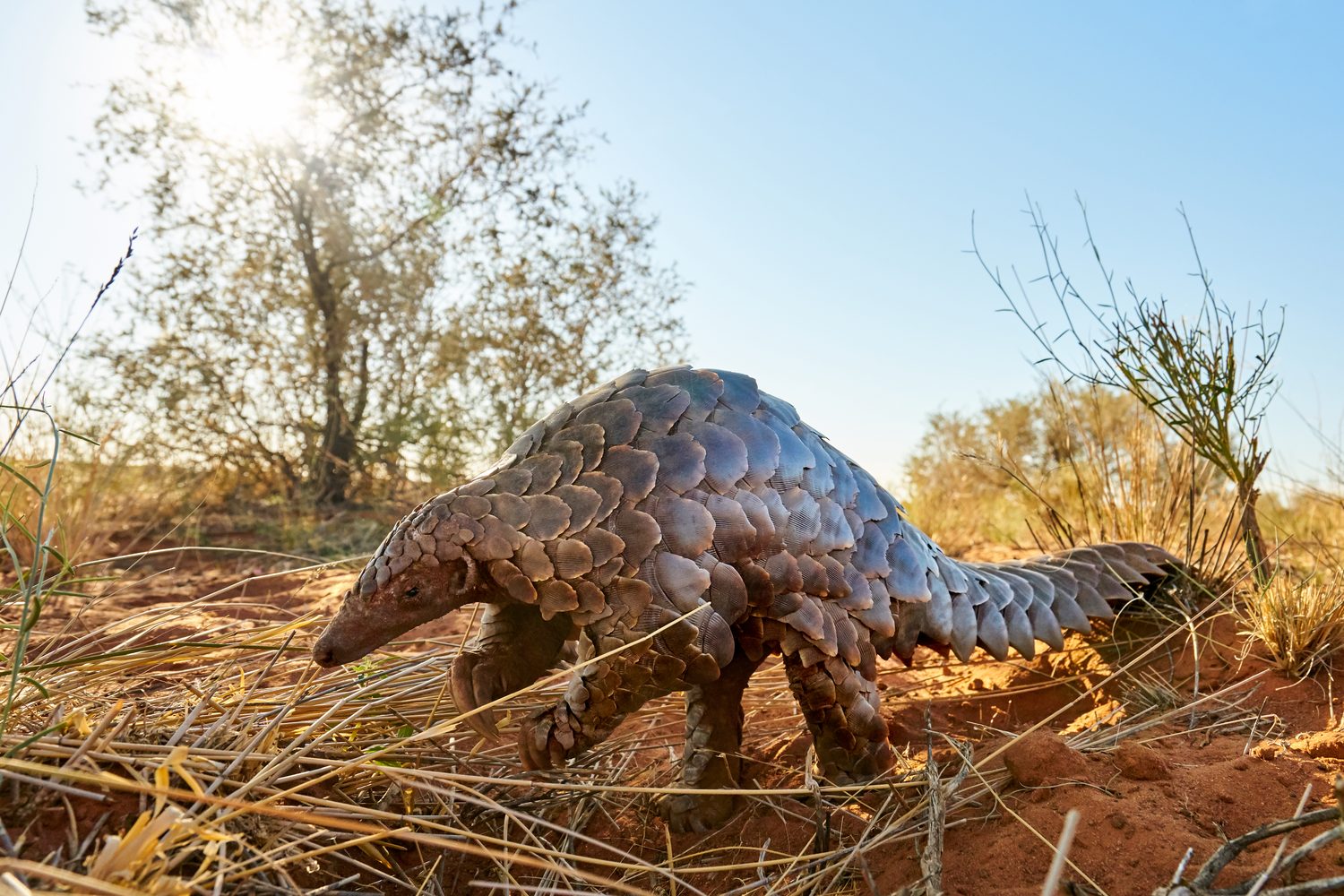
On a well-planned safari of nine to twelve days in the right places, you have an excellent chance of seeing lion, elephant, buffalo and giraffe, a very good chance of leopard, and a real but less certain chance of rhino and cheetah. Wild dogs, pangolins and aardvarks are the gifts you hope for and can't plan around.
Three things improve your odds more than anything else: where you stay, how long you stay, and who guides you. Private concessions and conservancies let your guide drive off-road to a sighting and stay with it; three nights or more in each place gives the land time to show you more than its highlights; and a great guide finds what an average one drives past. For choosing the camps themselves, read Where to Stay on Safari.
And the encounters people remember longest are rarely the rarest. They are ordinary animals watched long enough to see how they live.

The Big Five Animals, and Everything Else
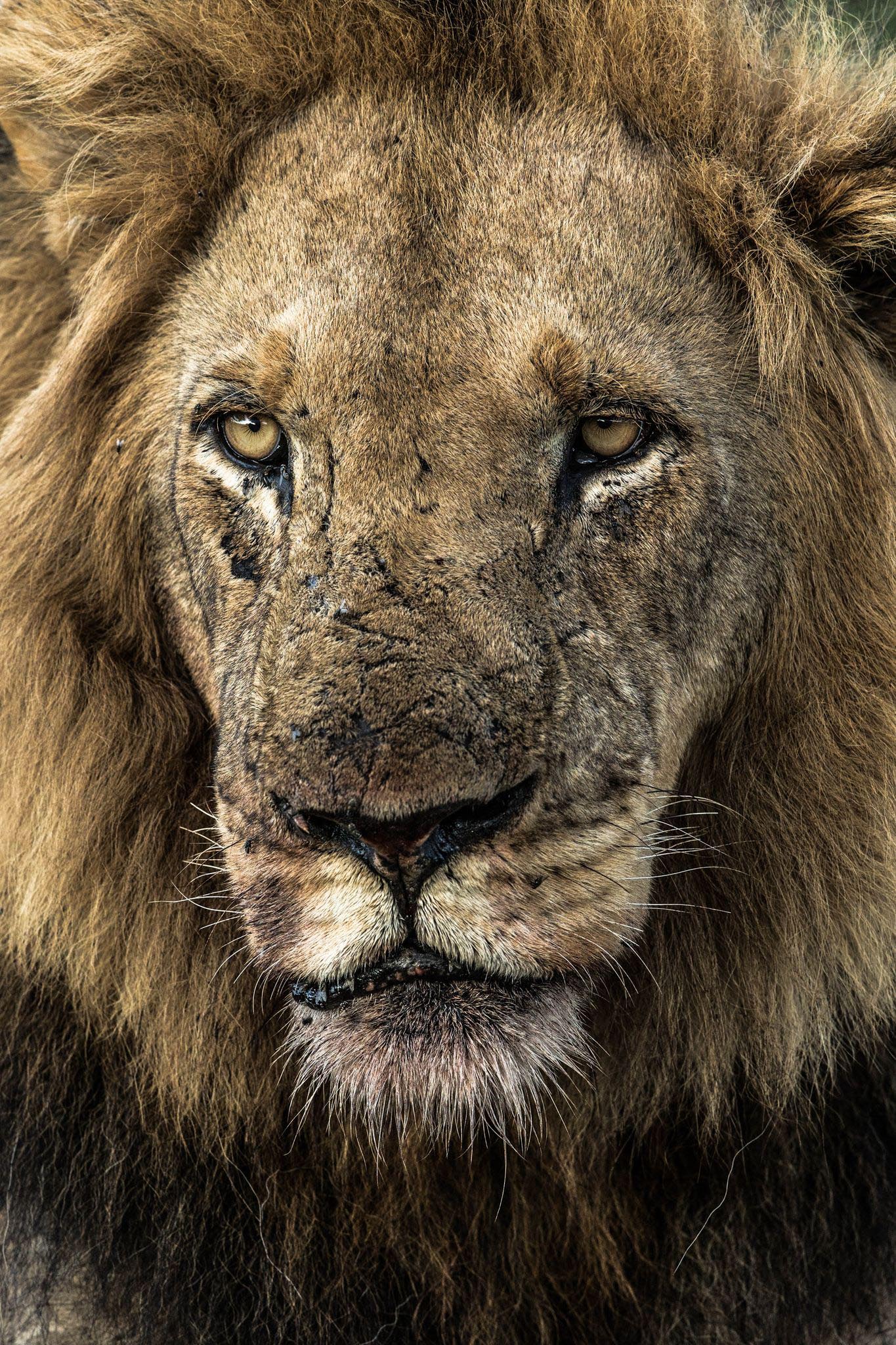
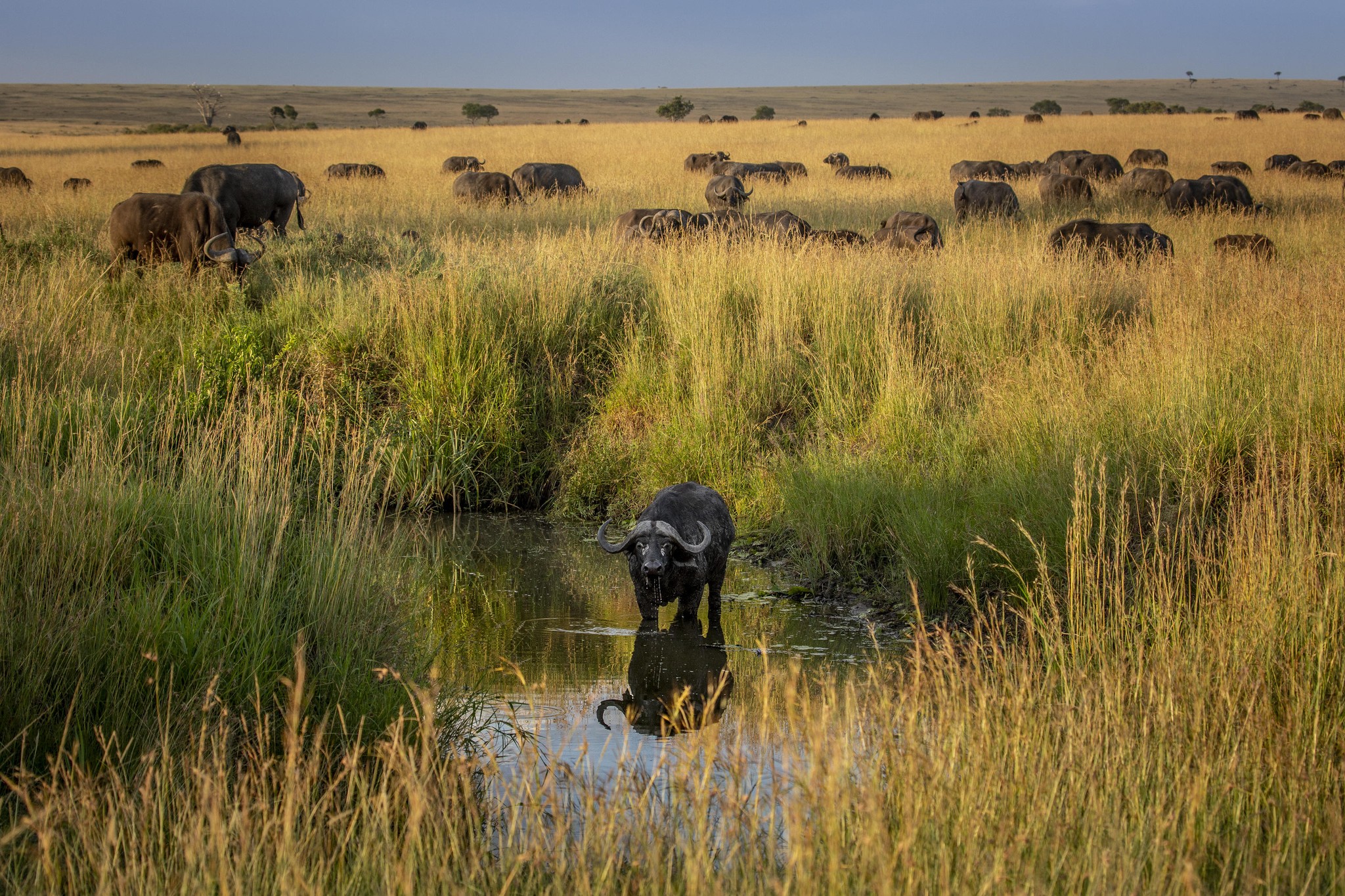
The Big Five are lion, leopard, elephant, buffalo and rhino. The name comes from big-game hunting, where they were counted the most dangerous animals to pursue on foot, and it survived into photographic safari because it makes a tidy list. It is a fine place to start. Lions move through the landscape as though they own it, because they do. Leopards seem too beautiful to be real. Elephants humble you with their intelligence and their families. Buffalo carry old danger in their eyes even at rest. Rhinos, still under siege from poaching, are a living argument for conservation.
But when the Big Five become the only measure, travelers miss nearly everything else. They see the buffalo but not the oxpeckers riding it, picking off ticks. They photograph the elephant but not the family around it: the aunts minding the calves, the matriarch deciding where the herd goes next. They drive past honey badgers, secretary birds and ground hornbills on the way to a rhino. They miss wild dogs, whose packs decide when to hunt with a chorus of sneezes that researchers have described as a kind of vote. And then there are the birds, which turn a surprising number of first-time visitors into birders by the third day; Kenya alone has recorded more than a thousand species.
Some travelers need the list done before they can relax into the rest. That's fine; a good guide will get you there, then show you what you were missing. But if you arrive knowing that any animal watched with time will satisfy more deeply than a rare one glimpsed, the safari opens up.

The Best Places to See Wildlife in Africa
Every animal has places where it is at its best, and building a safari around the one you care about most is often the smartest decision you'll make.
Leopards. South Africa's Sabi Sand, where generations of leopards have grown up around vehicles, is the most reliable place on the continent to watch one at length. Zambia's South Luangwa, Botswana's Okavango and the Maasai Mara are superb too, with more patience required.
Lions. The Mara, the Serengeti and the Okavango hold large, well-studied prides, and in the Mara's dry season you may see several in a day.
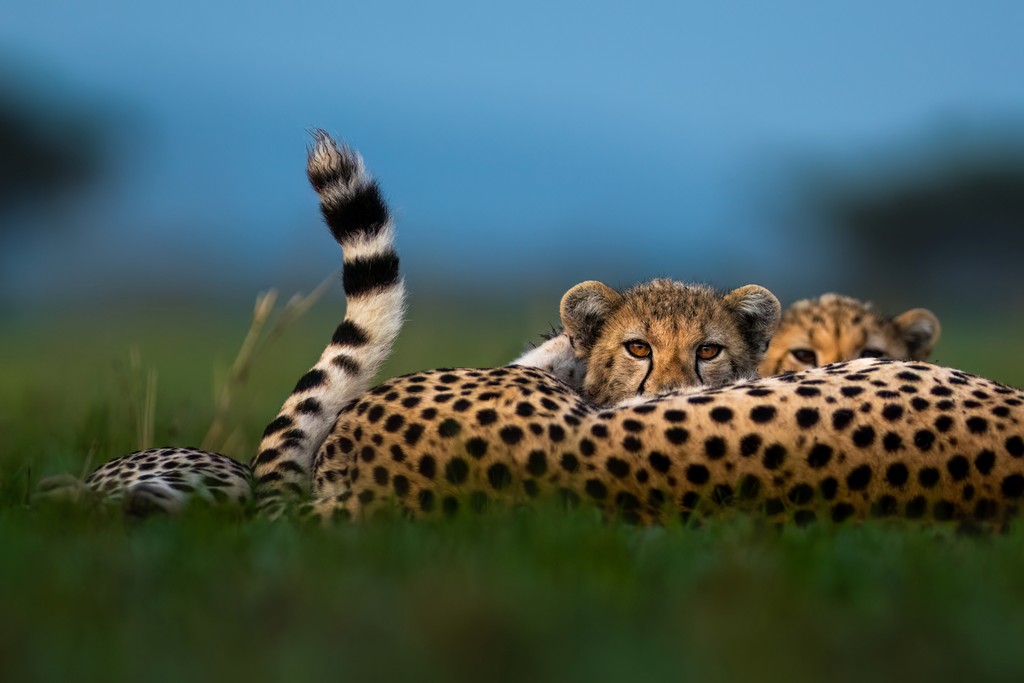
Cheetahs. Open plains suit them, the Mara and the Serengeti above all, where they hunt by day in full view.
Wild dogs. Endangered and wide-ranging, they are best looked for in northern Botswana and in Zimbabwe's Mana Pools and Hwange.
Rhinos. South Africa's private reserves and Kenya's Laikipia conservancies, among them Lewa and Ol Pejeta, offer the best odds, and in some reserves you can track them on foot. Tanzania's Ngorongoro Crater holds a small population of black rhino. One thing few people expect: across much of South Africa, the Sabi Sand included, rhinos are now dehorned to take away the poachers' reward, and since the Sabi Sand did so in 2022 its poaching has fallen by more than ninety percent. Where protection is strong enough to leave them whole, as in much of Kenya, which has largely chosen to guard its rhinos with their horns intact, and on reserves like Zimbabwe's Malilangwe, where we have watched them ourselves, you see a rhino as it is meant to look. A long horn, these days, is a measure of how well an animal is guarded.
Elephants. Botswana has the largest elephant population of any country, concentrated in the north around the Chobe, and Kenya's Amboseli has some of the last great tuskers, with Kilimanjaro behind them.
The Migration. The southern Serengeti for calving from January to March, and the northern Serengeti and the Mara for the river crossings from July to September.
Gorillas and chimpanzees. Mountain gorillas live only in the Virunga volcanoes and Uganda's Bwindi forest. Chimpanzees are easiest to see in Uganda's Kibale Forest and Tanzania's Mahale Mountains.
When the animals on your list split between east and south, read East Africa vs Southern Africa.

Abundance or Exclusivity: Two Routes to Wonder
East Africa offers abundance on a scale that shouldn't exist anymore and somehow does. The Mara in the dry season holds some of the highest densities of big predators on earth: prides of twenty lions, cheetahs hunting in the open, hyenas waiting to steal the kill and jackals waiting on the hyenas. For a first safari that abundance is reassurance. You will see a great deal, often in a single morning.
The trade is company. In the national reserves, radio calls bring other vehicles, and at a Migration crossing you may share the moment with a dozen or more. It is still extraordinary, but you are part of an audience.
The alternative is exclusivity: private concessions and conservancies, in East Africa and across Southern Africa, where vehicle numbers are capped and you may be alone at a sighting for as long as it lasts. Some of these places are as rich as anywhere, the Sabi Sand for leopards and the Okavango for lions and wild dogs. Others ask for more patience, and the finding becomes part of the pleasure. You learn to read alarm calls and tracks rather than radios, and when the leopard appears, she is yours for the hour.
Most of the safaris we design lean on the conservancies for exactly this reason, often with a day or two in the famous parks for the spectacle. Why the land makes the difference is in How to Choose a Conservation-Led Safari.

Spectacle or Subtlety: What Moves You
The Great Migration is spectacle on a scale that overwhelms. Aerial counts have put the wildebeest at around 1.3 million for decades, moving with hundreds of thousands of zebra and gazelle; a 2025 satellite study counted fewer than 600,000 wildebeest, and scientists are still working out which picture is right. Either way, when the herds mass on a riverbank and the first animal commits, you are watching one of the last great wildlife events on earth: the plunge, the crocodiles, the lions waiting on your side.
The Mara River Crossings
The crossings happen where the Migration meets the Mara River, in the northern Serengeti around Kogatende and in Kenya's Maasai Mara, usually from about July to September and sometimes into October. The herds can gather on a bank for hours or days before one animal commits, and they often cross back and forth more than once in a season, with crocodiles waiting below. We position you within reach of the crossing points for a stretch of days, because no one can promise the hour.
But spectacle creates pressure. You need the herds to cross during your particular days, and the wildebeest don't consult your itinerary. The focus on spectacle also means people miss the quieter encounters that often move them more: elephants talking to each other in rumbles below the range of human hearing, the politics of a baboon troop, a heron fishing the shallows with perfect patience, a dung beetle rolling a ball many times its own weight and steering by the Milky Way.
Some of the most profound hours on safari happen at that scale. Sitting in a hide while the waterhole's regulars come and go. Following fresh tracks on foot with a guide who reads the ground like text. How to build those into your days is in What to Do on Safari. The question isn't which is better. It's what moves you more: the drama that takes your breath away in the moment, or the quiet encounter you're still thinking about weeks later.

Before the First Drive
Before the engine starts on your first morning, take two minutes with your guide. It may be the most useful conversation of the trip, and it is one we remind every client of in their final briefing.
Tell them what you love. Cats, birds, photography, trees, the small things. A guide who knows you'd give anything for a pangolin, or would happily spend an hour with a lilac-breasted roller, looks for different things than one who is guessing.
Tell them what frightens you. Snakes, elephants at close range, the height of an open vehicle, the dark on the drive home, or simply watching a kill. None of it is embarrassing, and all of it is useful. A good guide will adjust the distance, the angle and the timing without making anything of it.
Know that you are in control. Your guide is watching the animals and watching you, every moment. But if anything feels wrong, too close, too long, too much, say so, quietly and at once. You won't offend anyone. They will handle it calmly and professionally, because that is exactly what they are trained to do.
At a Sighting
Animals tolerate vehicles because they read them as one large, uninteresting shape. Keep it that way: stay seated, keep your arms inside and your voice low, and don't stand or lean out unless your guide says it's fine, because a human silhouette breaking that shape changes how an animal sees you. Predation is part of the bush and it isn't always quick; if you'd rather not watch, say so, and your guide will move on without a second thought. On foot the rules are stricter, and your guide will brief you before you set off. And never feed anything, anywhere.
Habituated, Not Tame
Most of the places we send clients are reserves where the animals have grown up around vehicles and walking guides, and have learned over generations that people are neither food nor threat. That familiarity is what lets you sit quietly with a lion or a breeding herd of elephants at close range. It is not tameness, and it doesn't transfer everywhere. When an attack makes the news, in our experience it is usually one of two things: animals unused to people, often in areas that were hunting concessions until recently, where elephants in particular have long memories; or people breaking the basic rules, such as walking alone at night or leaving a tent after dark without an escort. Choosing where you stay is part of how we manage the first. The second comes down to a few simple rules, and your guide will give you all of them on day one.
Small Habits of the Bush
Wherever you stay, you are in the wild, and guides and camp staff live by a few small habits worth borrowing. After a walk or a drive through long grass, give yourself a quick check for ticks in the shower. Turn back the covers before you climb in; on a cold night you'll usually find nothing more surprising than a hot-water bottle. Give clothes that have hung out to dry a shake before you put them on, and tap out your shoes before you lace them. None of this is cause for worry. It is simply how people who live in the bush keep small surprises from becoming stories.

The Primate Exception
Mountain gorilla encounters work by a different logic. You trek for anything from under an hour to several hours through steep mountain forest, depending on where the family moved overnight. Then you find them, and you have exactly one hour.
That hour is hard to describe afterward. The rules ask you to keep seven meters away; the gorillas don't always read them, and a youngster may wander past close enough to touch while the silverback watches with an indifference you come to understand as tolerance. Juveniles play in ways so like human children that the kinship stops being theoretical. The hour passes like minutes, and people often come out of the forest silent, sometimes in tears without being sad.
It isn't really photography: the light is dim, the hour is short and you are overwhelmed. Nor is it much of a gamble, because trackers find the habituated families before you arrive and a sighting is all but certain. It is closer to a pilgrimage. Each family receives no more than eight visitors a day, permits cost $1,500 in Rwanda and $800 in Uganda in high season, and trekkers must be at least fifteen. If this calls to you, build the safari around it; it changes how every other encounter feels. More in our Rwanda & Uganda safari guide.
What We Can't Promise
We can't promise you'll see a leopard. We can put you where leopards are most often seen, with guides whose tracking borders on the supernatural, and give you enough days for patient searching. But leopards are solitary, secretive and mostly nocturnal, and some weeks they keep to themselves.
We can't promise a river crossing during your dates. We can position you in the right region in the right window, in a camp that moves with the herds, and explain what makes them cross. But wildebeest follow grass and rain, not calendars.
We can't promise any specific sighting. That uncertainty isn't a flaw in the safari; it is the safari. It means something precisely because it can't be controlled, and the travelers who come home happiest are the ones who arrived buying possibilities rather than promises, open to whatever Africa decided to show them.

Wildlife Encounter Questions, Answered
What are the Big Five animals?
Lion, leopard, elephant, buffalo and rhino. The name comes from big-game hunting, where they were considered the most dangerous animals to pursue on foot. Today it is simply the shorthand most first-time travelers use for the animals they hope to see.
Where is the best place to see the Big Five?
South Africa's private reserves, such as the Sabi Sand, give the best odds of all five on a single stay, with leopards a particular strength. In East Africa, Tanzania's Ngorongoro Crater is one of the few places where all five are possible in a single day, and Kenya's Laikipia conservancies are strong for rhino.
Where is the best place to see leopards?
South Africa's Sabi Sand, where leopards have grown up around vehicles for generations and can often be watched at length. Zambia's South Luangwa, Botswana's Okavango and the Maasai Mara are excellent too, with more patience required.
How close do you get to animals on safari?
Often remarkably close. In an open vehicle in a private reserve, lions and leopards may pass within a few yards, because they have learned that vehicles are neither food nor threat. On foot you keep a much greater distance, and with mountain gorillas the rule is seven meters, though the gorillas don't always keep to it.
Is it safe to be that close to wild animals?
Yes, when you follow your guide. Where we send clients, the animals have grown up around vehicles and read them as a single, harmless shape, which is why you stay seated and keep your voice low, and guides read behavior long before it becomes a problem. If anything makes you uneasy, tell your guide straight away; they would always rather you did.
Can you see gorillas and the Big Five on the same trip?
Yes. Rwanda combines easily with Kenya or Tanzania, and a few days in the mountains before or after the savanna is one of the great pairings in Africa. Trekkers must be at least fifteen, and permits should be secured months ahead.

How We Design for Encounter Quality
When we design a safari, we aren't maximizing a species count. We're creating the conditions for encounters that change how you see rather than just what you've seen: properties whose guides have the time and freedom to stay with a sighting, private vehicles that move at your pace, hides and walking where you want depth, and enough nights in each place for behavior to reveal itself. Three nights gives you sightings; four or five begins to give you the animals' lives. Tell us what you hope to see, and what you're nervous about, and we'll build the days around both. Begin the conversation whenever you're ready.
The Printable Safari Packing Checklist
Four designed pages, free: the complete checklist, the landscape palette, packing by season, and traveling with children. Tell us where to send it.
Read Further



Ready to Meet Africa's Wildlife?
Tell us what matters: iconic species or natural behavior, abundance or exclusivity, spectacle or subtlety. We design for encounter quality over species count.

" height="6.799809999999999px" id="UnPIFpqy2" transform="translate(4.733 4.667)" width="6.799800000000001px"/><path d="M 0.8 0 C 1.267 0 1.6 0.4 1.6 0.8 C 1.6 1.267 1.266 1.6 0.8 1.6 C 0.333 1.6 0 1.267 0 0.8 C 0 0.334 0.333 0 0.8 0 Z" fill="rgb(165, 176, 170)" height="1.6000999999999999px" id="wjKJl84P4" transform="translate(10.867 3.733)" width="1.6000999999999994px"/><path d="M 7.333 0 C 8.533 0 8.8 0.067 9.4 0.067 C 10.467 0.134 11.466 0.4 12.2 1.133 C 12.933 1.867 13.2 2.867 13.267 3.934 C 13.333 4.533 13.333 4.8 13.333 6 L 13.333 7.333 C 13.333 8.533 13.267 8.8 13.267 9.4 C 13.2 10.467 12.933 11.467 12.2 12.2 C 11.466 12.933 10.467 13.2 9.4 13.267 C 8.8 13.333 8.533 13.334 7.333 13.334 L 6 13.334 C 4.8 13.334 4.533 13.267 3.933 13.267 C 2.8 13.2 1.867 12.933 1.133 12.2 C 0.4 11.467 0.133 10.467 0.066 9.4 C 0 8.8 0 8.533 0 7.333 L 0 5.934 C 0 4.734 0.066 4.467 0.066 3.867 C 0.066 2.8 0.333 1.867 1.133 1.067 C 1.867 0.334 2.8 0.067 3.866 0.067 C 4.466 0 4.733 0 5.933 0 Z M 6.666 1.2 C 4.933 1.2 4.733 1.267 4 1.267 C 3.266 1.333 2.533 1.467 2 2 C 1.466 2.533 1.333 3.267 1.267 4 C 1.2 4.667 1.2 4.867 1.2 6.667 C 1.2 8.4 1.2 8.6 1.267 9.333 C 1.333 10.067 1.466 10.8 2 11.333 C 2.533 11.867 3.266 12 4 12.067 C 4.666 12.134 4.866 12.133 6.666 12.133 C 8.4 12.133 8.6 12.067 9.333 12.067 C 10.066 12 10.8 11.867 11.333 11.333 C 11.866 10.8 12 10.067 12.066 9.333 C 12.133 8.6 12.133 8.4 12.133 6.667 C 12.133 4.934 12.066 4.733 12.066 4 C 12 3.267 11.866 2.533 11.333 2 C 10.8 1.467 10.066 1.333 9.333 1.267 C 8.666 1.2 8.466 1.2 6.666 1.2 Z" fill="rgb(165, 176, 170)" height="13.3335px" id="W1sWTdVhE" transform="translate(1.467 1.467)" width="13.33300001940264px"/></svg>)
" height="12.000010000000001px" id="Px7drxAPR" transform="translate(4.133 2.134)" width="7.53329px"/></svg>)
" height="13px" id="RXaPy7s6t" transform="translate(0.838 1.5)" width="14.381208999999998px"/></svg>)
" height="11.99998861028647px" id="xgm2Ladnt" transform="translate(2.036 2)" width="11.92787px"/></svg>)
" height="9.26662px" id="tz2Esvrs4" transform="translate(1.467 3.567)" width="13.333300000000001px"/></svg>)