Life on Safari
Safari Photography
What gets remembered.
By Hans Arnesen, Founder of Reverie Safaris · Updated September 2026
Safari Photography
What gets remembered.
There's a question guides like to ask returning guests: which image from your safari do you look at most?
The answers say something about photography and memory that nobody plans for.
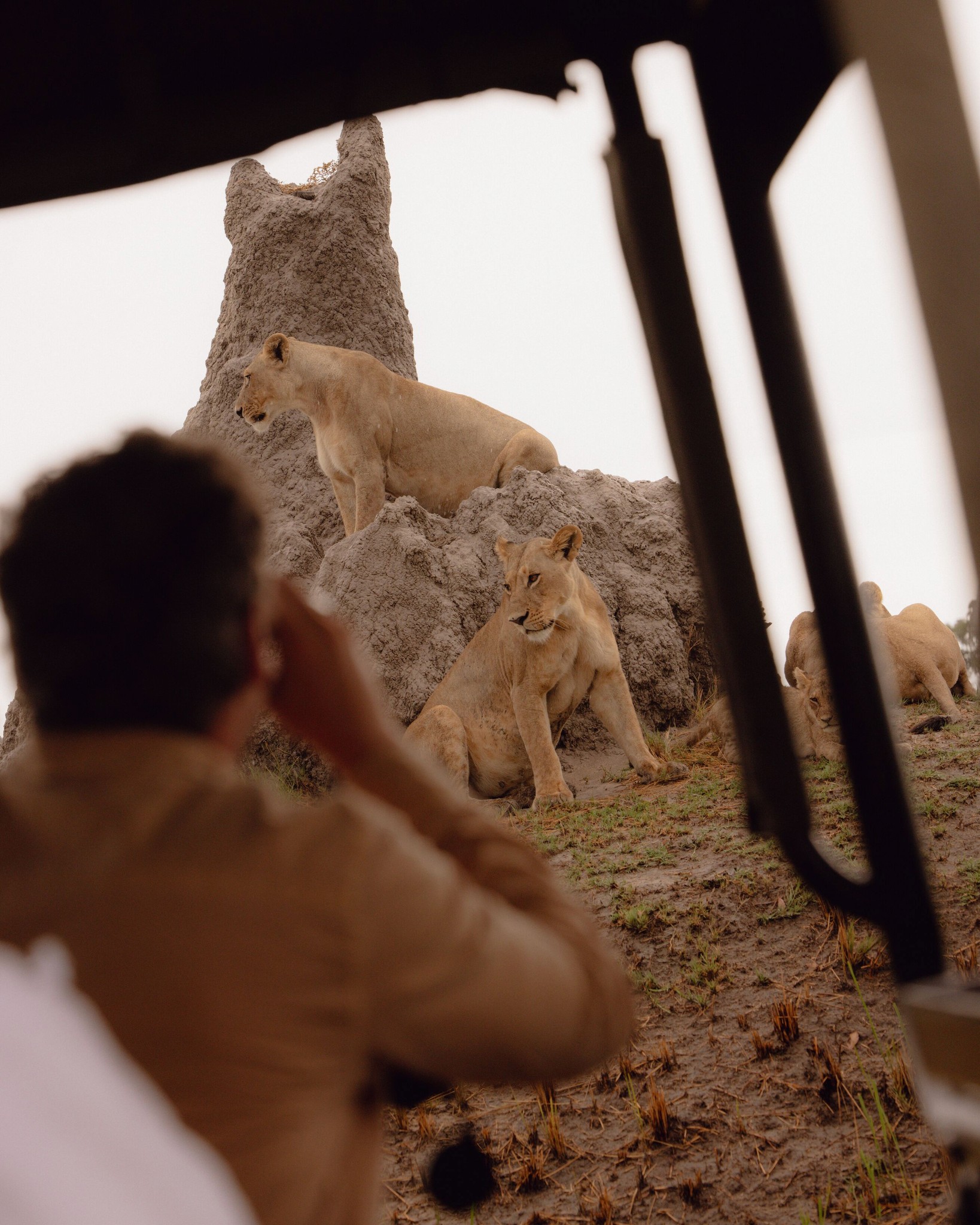
Sometimes it's the one you'd expect. The couple who spent a week in Botswana's photographic hides, with equipment that cost more than the trip, will pull up the leopard portrait that took three days to make: eyes sharp, whiskers catching the light. They look at it every week. It stands for the animal and for the effort.
Sometimes it's the throwaway. The family whose teenagers filmed everything on their phones, too much, probably, out of habit. But there's one clip, eleven seconds long, from the morning they found elephants at a waterhole, when their usually sullen fifteen-year-old gasped with such pure wonder that everyone went quiet. They don't watch it for the elephants. They watch it to hear their daughter's voice before self-consciousness came back.
And sometimes it's the image that shouldn't matter: the blurred shot from the morning you were laughing too hard to hold the phone still, the soft sunset you were watching instead of exposing, the ordinary landscape that happened to catch your partner reaching for your hand.
The pattern is clear. The images people return to aren't always the best ones technically. They're the ones that caught something true about that journey, for those people, at that moment in their lives. So safari photography is less about equipment than about deciding what role making images should play in how you experience Africa, and then packing and planning for that.
For where the light and the wildlife line up, see Safari Destinations. For the seasons and their light, read Best Time to Go on Safari.

The Short Answer
Decide first what photography is for on this trip, because it changes everything else.
If it's memory, bring your phone and, if you like, one camera with a 100–400mm zoom; together they cover nearly everything you'll want to shoot. If it's the point of the trip, bring the kit you already know, two bodies so you never change a lens in the dust, and book a private vehicle, which will do more for your pictures than any lens. Either way, remember that on most bush flights the 33–44 pound allowance includes your camera bag, so heavy kit needs extra weight or a seat booked in advance.
And plan your days around the light. The first and last hours of the day do more for an average photographer than any upgrade.

Pursuit or Presence
Safari photography means different things depending on why you're making images at all.
For some travelers it is the pursuit. They have studied the craft, invested in equipment that represents years of commitment, and measure the trip partly by what they bring home. An extraordinary sighting without the photograph feels incomplete. For others, photography serves memory: the images don't need to be perfect, only to bring back the smell and sound and feeling of being there. Some find that a camera makes them see, because composing a frame forces them to notice light, gesture and pattern they'd otherwise miss. And some find it gets in the way, and take few pictures or none.
None of these is superior, but they call for different safaris. Photography as pursuit means private vehicles that stay as long as the behavior warrants, guides who understand light and will reposition for the angle, hides where you can wait an afternoon for a moment that lasts seconds, and days built around the golden hours rather than around comfort. The images will be extraordinary, the kind that hold up as large prints.
The cost is borne by whoever is traveling with you. The partner who wants to linger over breakfast while you worry about first light. The teenager who wants to go back to camp while you wait for the leopard to turn her head. The parent who finds long waits exhausting. Photography becomes the priority and everyone else either adapts or quietly minds.
Presence works differently. You photograph when moved to, with whatever is least intrusive, usually the phone, and trust that memory will keep what matters. Most travelers sit somewhere in between: some good photographs, please, but not at the expense of the experience. That middle ground needs guides who can read a vehicle and tell who came for the pictures and who didn't.

What to Bring
For Serious Photographers
Bring what you know. If your workflow is built around certain bodies and lenses, bring them; familiarity matters more than theoretically better gear you haven't learned. Two bodies are worth the weight, one with a long zoom such as a 100–400mm or 100–500mm and one with something wider, so you never change a lens in the dust or miss a moment doing it. A 600mm is worth carrying only if you photograph birds seriously and can fit it inside your bush-flight allowance. If your kit is heavy, ask us to pre-book extra weight or a seat.
For Everyone Else
One good mirrorless camera with a long zoom will give you pictures that satisfy without turning the trip into a project. Learn it at home before you leave, not on the first drive. And know that some camps will lend you better equipment than you'd buy. Great Plains Conservation, founded by the wildlife filmmakers and photographers Dereck and Beverly Joubert, keeps professional camera bodies and a selection of lenses in every suite at its Réserve-Collection camps, free to use along with good binoculars, and downloads your pictures for you when you leave. At Angama Mara, the Photographic Studio hires out new cameras and lenses, runs complimentary tutorials and editing sessions, can send a photographer out on safari with you, and will print your favorites on paper or canvas before you leave.
On Your Phone
Modern phones are superb for landscapes, camp, people and video, and they weigh nothing extra. Where they fall short is distance, so use the built-in telephoto lens rather than pinching to zoom, which only enlarges the pixels. And don't underestimate video. The eleven-second clip may outlast every still.
Dust, Power and Storage
Dust is constant. Change lenses inside, keep the camera covered between sightings (a pillowcase works), and use a blower before any cloth touches the glass. Most camps can charge your batteries, though those running on solar power may ask you to charge in the main area rather than in your tent, so bring a spare battery for every body. Carry several memory cards and back them up each night; camp Wi-Fi is rarely up to uploading. The rest of the kit list is in African Safari Clothing & Packing List.
The Vehicle Makes the Picture
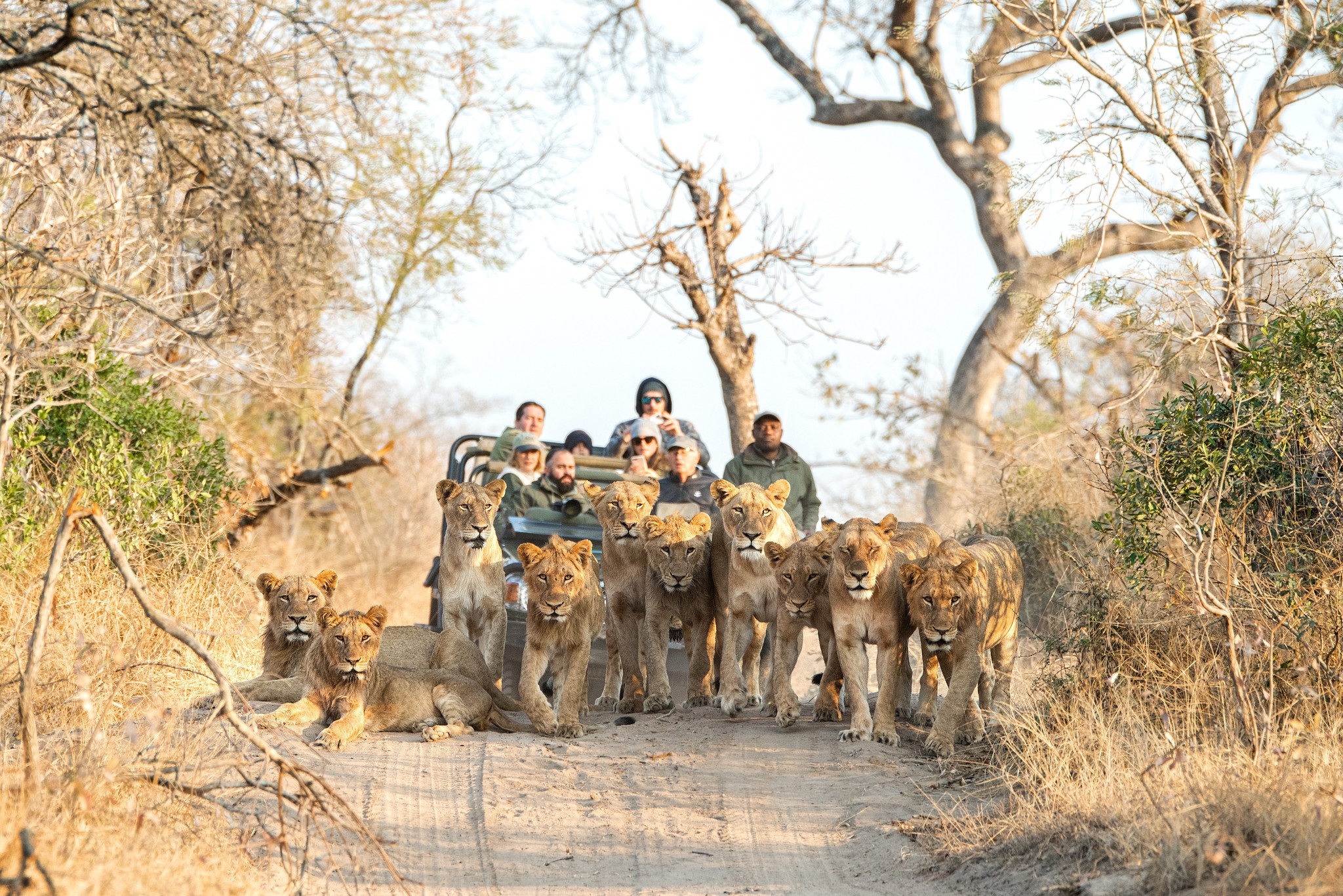
Where you sit matters as much as what you hold. On a shared vehicle the group decides when to move on: if you're waiting for better light and everyone else wants to find something new, you lose, and repositioning for an angle means negotiating with strangers about something they may not value. A private vehicle solves that, but only if everyone aboard shares the priority. Otherwise it simply privatizes the conflict. For mixed groups, the answer is usually a private vehicle plus a camp with other things to do, so the photographer gets the long mornings and everyone else gets theirs.
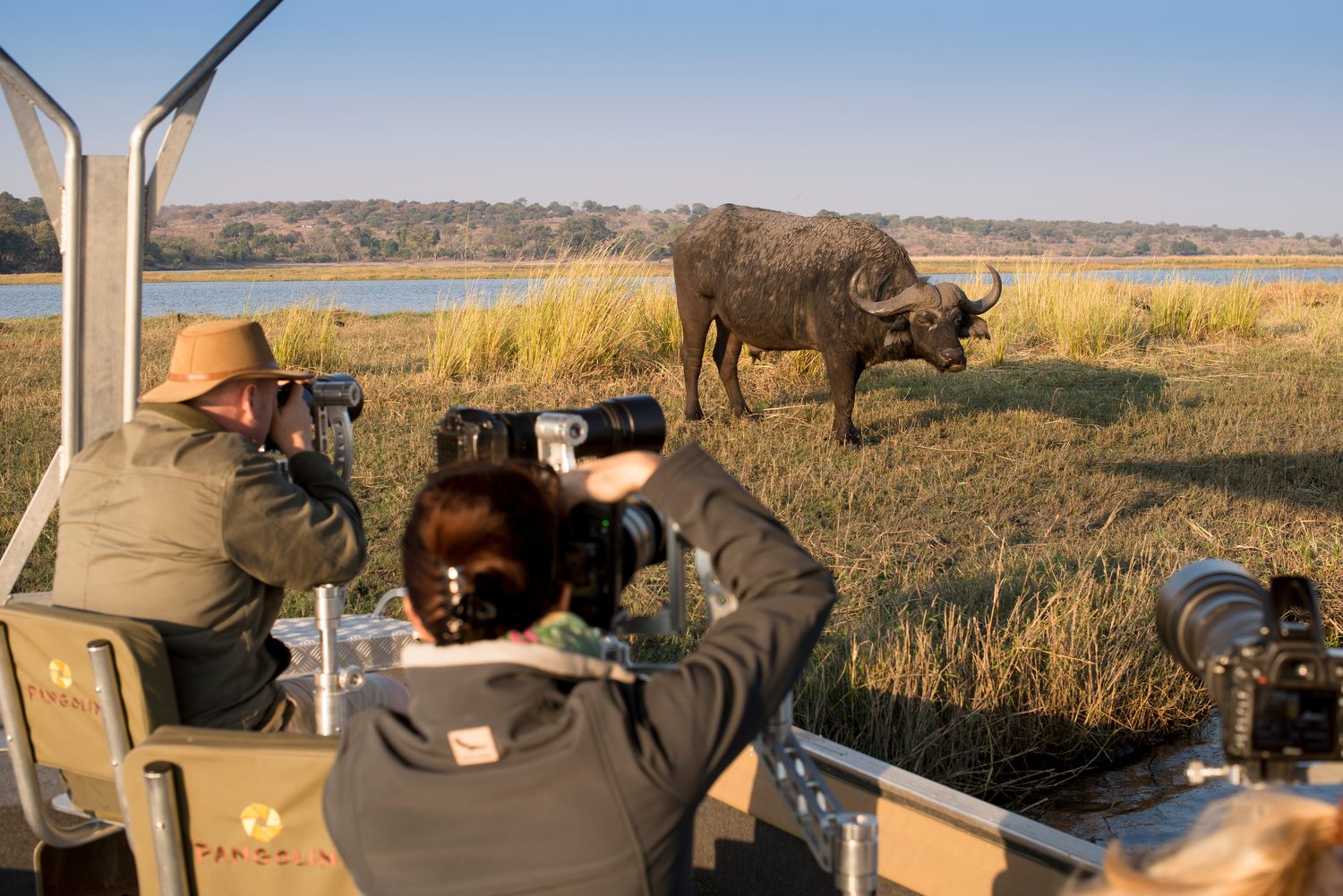
Water and hides give you what no vehicle can: the low angle. On the Chobe River, Pangolin Photo Safaris runs purpose-built eight-seat photo boats with fully rotating seats, each with its own camera mount and gimbal, and will lend you a camera if you arrive without one. In Kenya's Chyulu Hills, with Kilimanjaro on the horizon, Great Plains' ol Donyo Lodge has two hides at the waterhole in front of the lodge, one of them sunken, with a coffee machine and a fridge for the long wait. And at Ol Jogi in Laikipia, an exclusive-use estate that takes one group at a time, an underground tunnel runs from the house straight to a hide at the waterhole.
How hides fit into the rest of your days is in What to Do on Safari. More in our Kenya safari guide.

Light, Settings and Steadiness
If you're bringing a camera beyond your phone, this is enough to avoid feeling helpless. Everything else is refinement.
Light. The first hour after sunrise and the last before sunset make average photographers look good; harsh midday light makes good ones struggle. Green season storm light is its own gift, and many serious photographers prefer it for exactly that reason.
Settings. Continuous autofocus, short bursts, and auto ISO with a sensible ceiling, somewhere around 3,200–6,400 on a modern camera. Keep the shutter at 1/1000 second or faster for anything that moves. Dial exposure down for white animals and up for dark ones against a bright sky.
Steadiness. A beanbag on the vehicle's rail beats a tripod; your guide may have one, and a rolled jacket will do. Ask your guide to switch off the engine for a long lens. Tuck your elbows, breathe out, and shoot.
Focus. The eyes. Get them sharp and almost everything else can be soft.
On a phone. Tap where you want focus, slide the exposure down for bright scenes, brace against something solid, and use burst mode for movement.

Photographing From Camp
Some of the best pictures of a safari are taken without leaving camp. A waterhole in front of the deck brings elephants to breakfast. There is no engine vibration, no one waiting on you, and time to wait for the animal to lift its head. A suite facing water turns your own deck into a hide, which is one more reason the choice of suite matters, as we explain in Where to Stay on Safari.
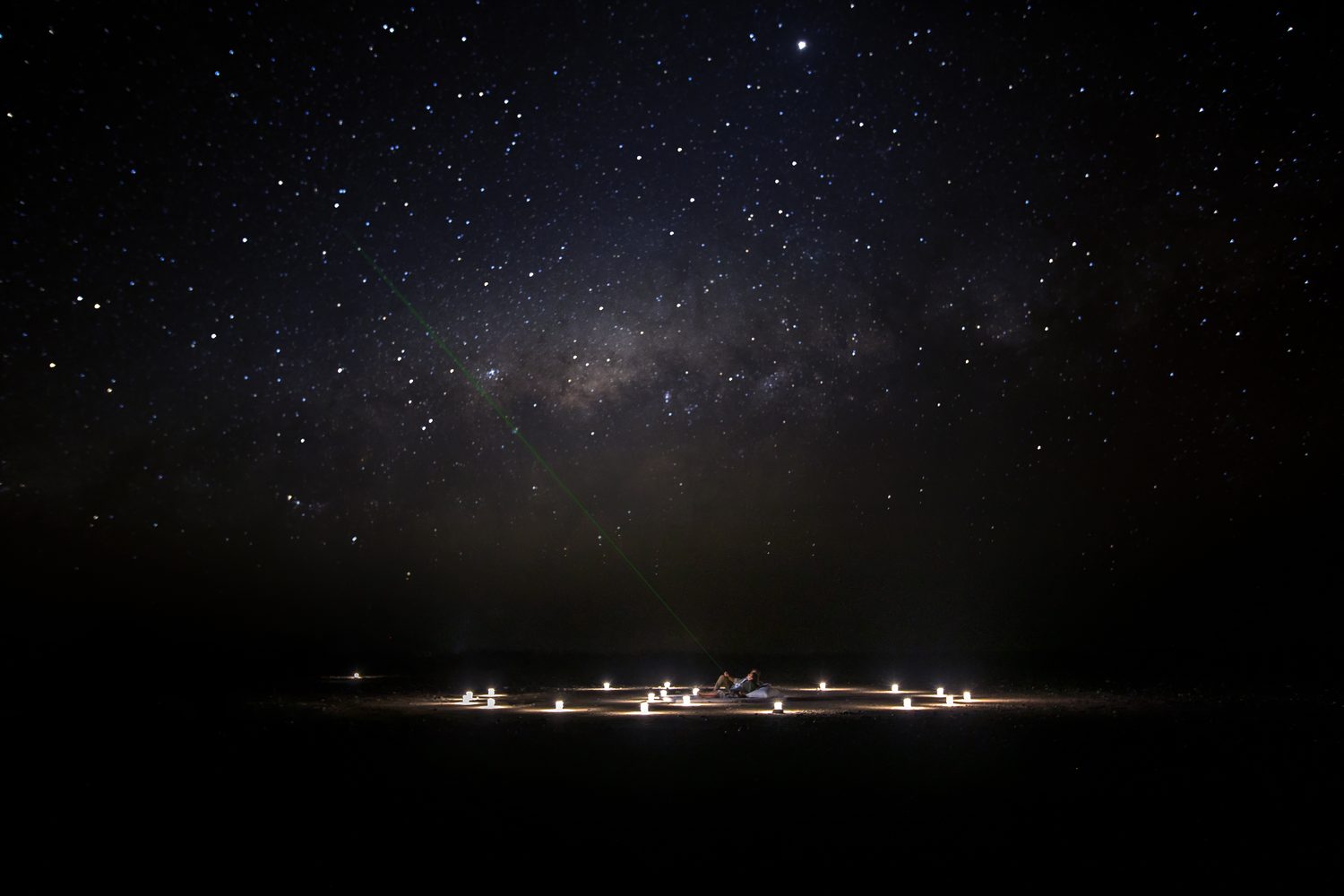
Camp is also where the pictures of your own people happen: the fire, the long lunch, the child asleep on a parent's lap after the morning drive. Those are the prints that end up on the wall, and they're the ones people most often come home without: hundreds of animals and hardly a picture of themselves. Hand your guide the phone at a sundowner; guides take far better pictures of their guests than anyone expects, and a few lodges will even send a photographer out with you. And in the dry season, far from any town, the night sky is extraordinary. A tripod, a wide lens and a few seconds of exposure will catch the Milky Way, but ask a guide to walk you somewhere dark rather than wandering off on your own.
Photographing Responsibly
A few rules protect the animals you came to see, and the good guides will hold you to them.
Switch off location tags. Rhinos can stay in the same area for days, so a geotagged photo posted online can point poachers straight to one. Many reserves ask you to turn geotagging off, and it's worth doing everywhere.
No flash on animals. Never at night, and never with gorillas, where flash isn't allowed. At the better camps, night drives use red-filtered spotlights so as not to dazzle what they find; your camera should respect the same principle.
Let the animal set the terms. Don't ask your guide to push closer, call, whistle or bang the vehicle to make an animal look up. The photograph of an animal disturbed is never the one you wanted.
Leave the drone at home. Most national parks prohibit drones without permits that are hard to obtain, most private reserves don't allow them either, and they can be held at customs on arrival.
Ask before photographing people. In camp, in villages and on the road. Most people are happy to be asked; your guide will know the local custom.
Safari Photography Questions, Answered
What lens do I need for safari?
A 100–400mm zoom, or its equivalent, covers most of what you'll photograph from a vehicle. Add something wider for landscapes and camp, and consider 500mm or 600mm only if you photograph birds seriously and can carry the weight within your bush-flight allowance.
Is a phone good enough for safari photos?
For landscapes, camp, people and video, yes. Phones fall short on distance, so use the built-in telephoto lens rather than pinching to zoom, and don't be surprised if your favorite safari memory turns out to be a short video.
Can I fly a drone on safari?
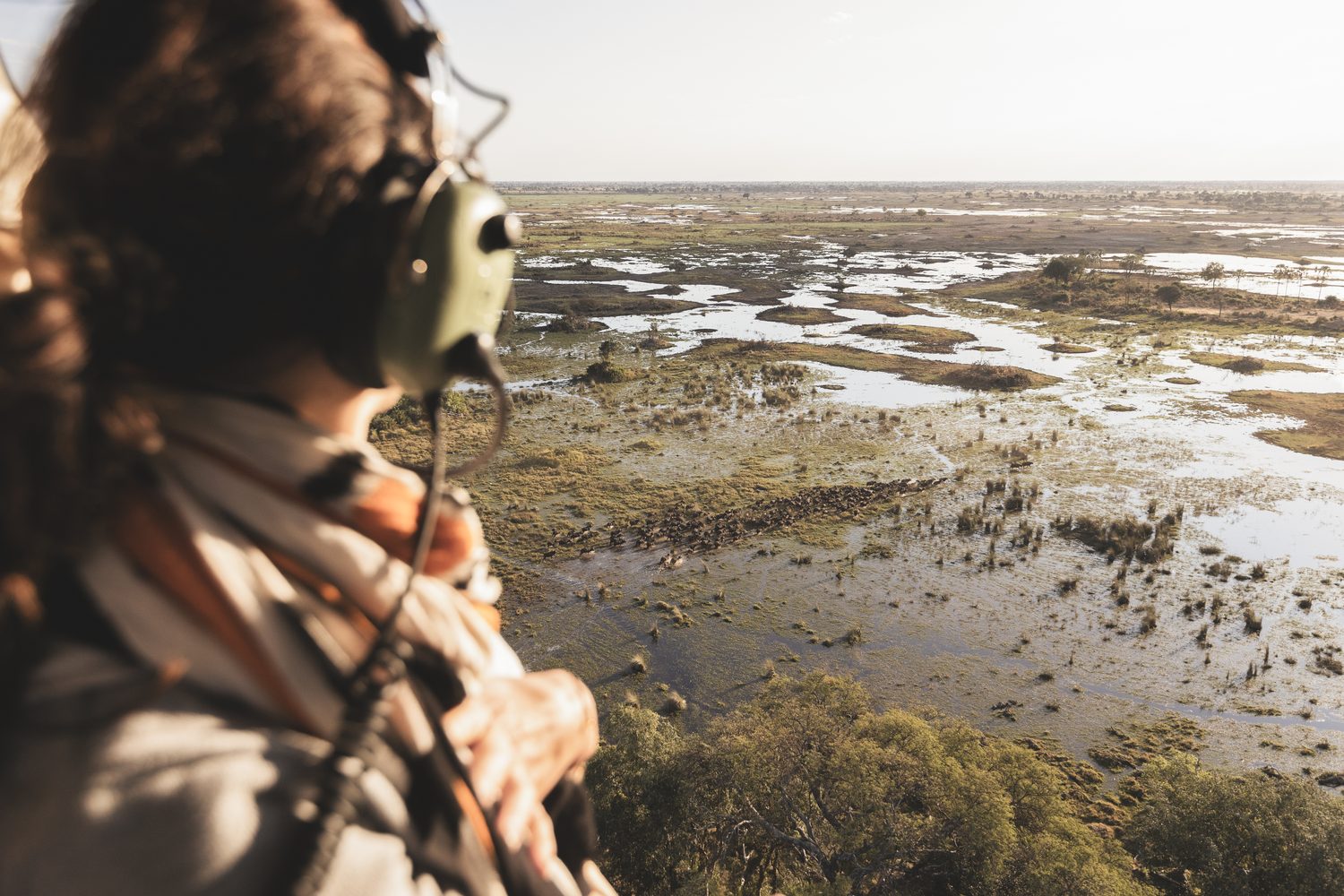
Rarely. Most national parks prohibit drones without permits that are hard to obtain, most private reserves don't allow them either, and they can be held at customs on arrival. If aerial images matter to you, a helicopter or balloon flight is the way to get them.
How do I protect my camera from dust on safari?
Change lenses inside, keep the camera covered between sightings, and clean with a blower before any cloth. Two bodies with different lenses mean you'll rarely need to change a lens outdoors at all.
Can I charge camera batteries at safari camps?
Yes, almost everywhere, though camps running on solar power may ask you to charge in the main area rather than in your tent. Bring a spare battery for every body, a universal adapter, and a way to back up your cards each night.
Do I need binoculars on safari?
Yes, one way or another. Most camps we book keep a pair per couple in the vehicle, and Great Plains' Réserve-Collection camps lend a good pair for your stay. Bring your own if you're particular about the glass, where 8x32 or 8x42 is the sweet spot, and a small pair for each child, because ownership changes everything.
What is the best camera for safari?
The one you already know how to use. If you're buying, a mirrorless body with fast autofocus and a 100–400mm zoom covers most of what you'll see, and a second body with a wider lens saves changing lenses in the dust. For many travelers the honest answer is a good phone, plus the professional kit some camps lend for free.
Can you take photos of gorillas?
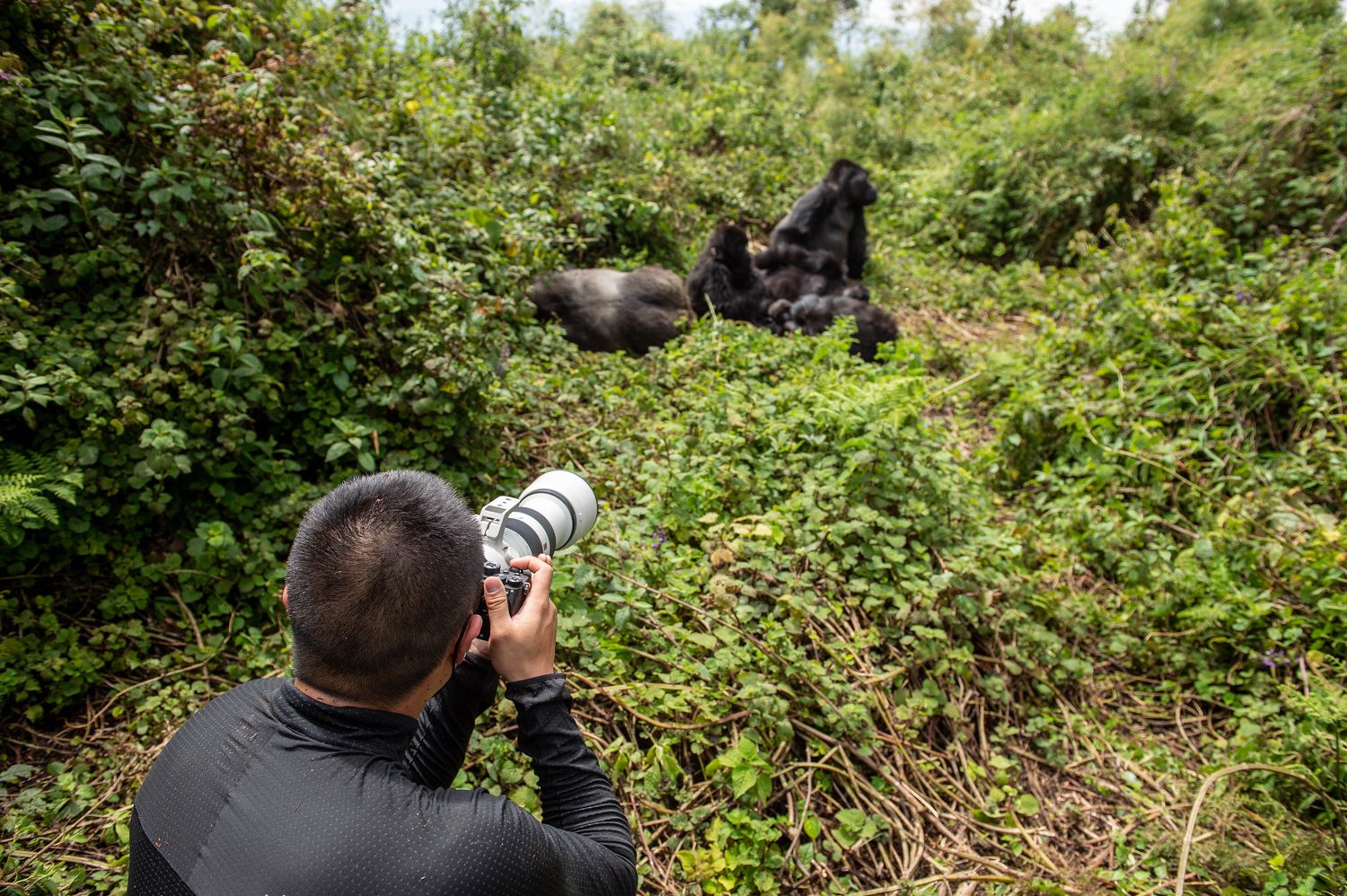
Yes, without flash, and within the one hour you have with the family. The forest light is dim, so a fast lens and a high ISO help, and many people find the hour is better spent watching than shooting.
When Photography Should Shape Your Safari
If you've invested in equipment, follow photographers whose work you admire, and find waiting energizing rather than tedious, photography should shape the safari: private vehicles with guides who understand light, hides and boats, and days built around the first and last hours. If not, a safari with a phone in your pocket and the freedom to shoot or not will serve you better. And if your group is mixed, we'll find the properties that give the photographer their mornings and everyone else theirs. Tell us what photography means to you, and we'll build around it. Begin the conversation whenever you're ready.
The Printable Safari Packing Checklist
Four designed pages, free: the complete checklist, the landscape palette, packing by season, and traveling with children. Tell us where to send it.
Read Further



Ready to Design Your Journey?
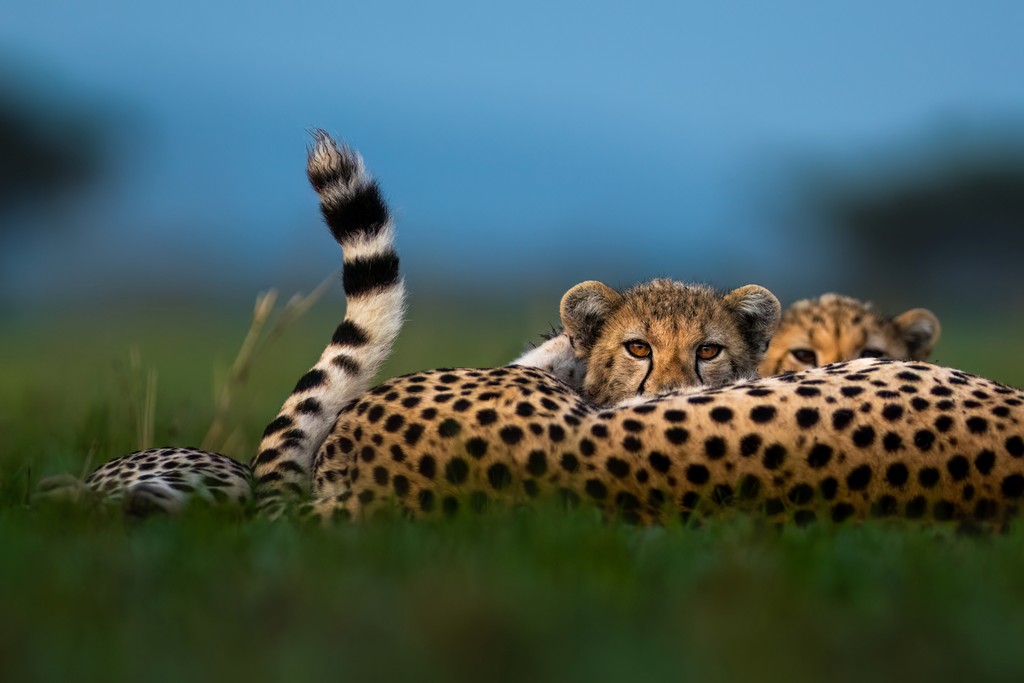
Tell us what photography means to you: primary focus or happy byproduct. We'll match timing, locations, and pace to your style.

" height="6.799809999999999px" id="UnPIFpqy2" transform="translate(4.733 4.667)" width="6.799800000000001px"/><path d="M 0.8 0 C 1.267 0 1.6 0.4 1.6 0.8 C 1.6 1.267 1.266 1.6 0.8 1.6 C 0.333 1.6 0 1.267 0 0.8 C 0 0.334 0.333 0 0.8 0 Z" fill="rgb(165, 176, 170)" height="1.6000999999999999px" id="wjKJl84P4" transform="translate(10.867 3.733)" width="1.6000999999999994px"/><path d="M 7.333 0 C 8.533 0 8.8 0.067 9.4 0.067 C 10.467 0.134 11.466 0.4 12.2 1.133 C 12.933 1.867 13.2 2.867 13.267 3.934 C 13.333 4.533 13.333 4.8 13.333 6 L 13.333 7.333 C 13.333 8.533 13.267 8.8 13.267 9.4 C 13.2 10.467 12.933 11.467 12.2 12.2 C 11.466 12.933 10.467 13.2 9.4 13.267 C 8.8 13.333 8.533 13.334 7.333 13.334 L 6 13.334 C 4.8 13.334 4.533 13.267 3.933 13.267 C 2.8 13.2 1.867 12.933 1.133 12.2 C 0.4 11.467 0.133 10.467 0.066 9.4 C 0 8.8 0 8.533 0 7.333 L 0 5.934 C 0 4.734 0.066 4.467 0.066 3.867 C 0.066 2.8 0.333 1.867 1.133 1.067 C 1.867 0.334 2.8 0.067 3.866 0.067 C 4.466 0 4.733 0 5.933 0 Z M 6.666 1.2 C 4.933 1.2 4.733 1.267 4 1.267 C 3.266 1.333 2.533 1.467 2 2 C 1.466 2.533 1.333 3.267 1.267 4 C 1.2 4.667 1.2 4.867 1.2 6.667 C 1.2 8.4 1.2 8.6 1.267 9.333 C 1.333 10.067 1.466 10.8 2 11.333 C 2.533 11.867 3.266 12 4 12.067 C 4.666 12.134 4.866 12.133 6.666 12.133 C 8.4 12.133 8.6 12.067 9.333 12.067 C 10.066 12 10.8 11.867 11.333 11.333 C 11.866 10.8 12 10.067 12.066 9.333 C 12.133 8.6 12.133 8.4 12.133 6.667 C 12.133 4.934 12.066 4.733 12.066 4 C 12 3.267 11.866 2.533 11.333 2 C 10.8 1.467 10.066 1.333 9.333 1.267 C 8.666 1.2 8.466 1.2 6.666 1.2 Z" fill="rgb(165, 176, 170)" height="13.3335px" id="W1sWTdVhE" transform="translate(1.467 1.467)" width="13.33300001940264px"/></svg>)
" height="12.000010000000001px" id="Px7drxAPR" transform="translate(4.133 2.134)" width="7.53329px"/></svg>)
" height="13px" id="RXaPy7s6t" transform="translate(0.838 1.5)" width="14.381208999999998px"/></svg>)
" height="11.99998861028647px" id="xgm2Ladnt" transform="translate(2.036 2)" width="11.92787px"/></svg>)
" height="9.26662px" id="tz2Esvrs4" transform="translate(1.467 3.567)" width="13.333300000000001px"/></svg>)